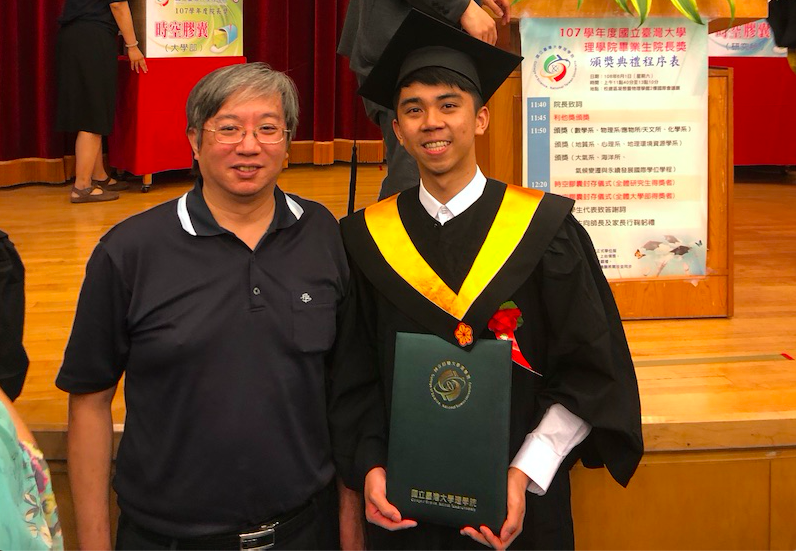
I joined Geographical Information Science Lab in the Department of Geography in National Taiwan University. My academic supervisor is Professor Tzai-Hung Wen, Ph.D.
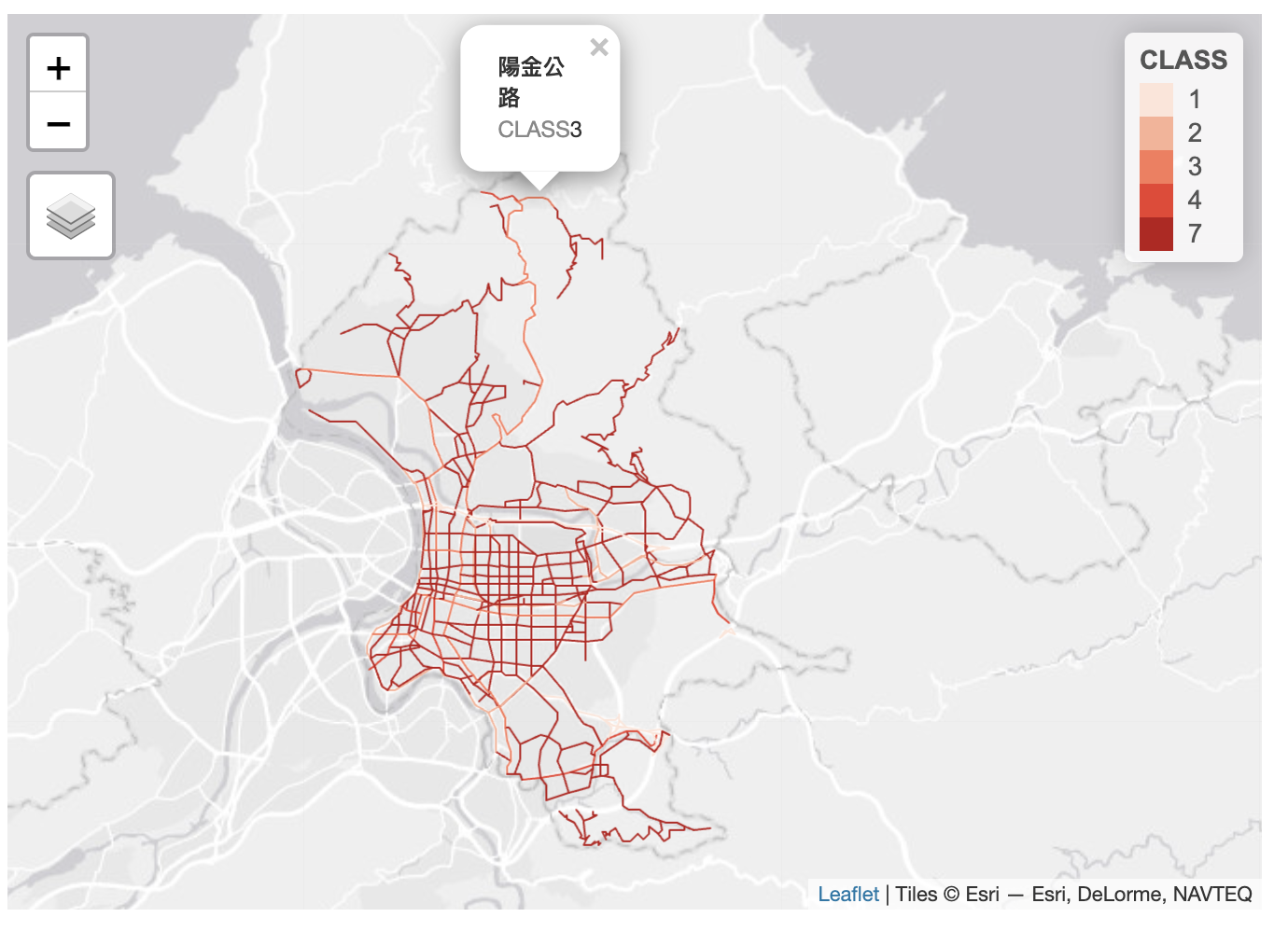
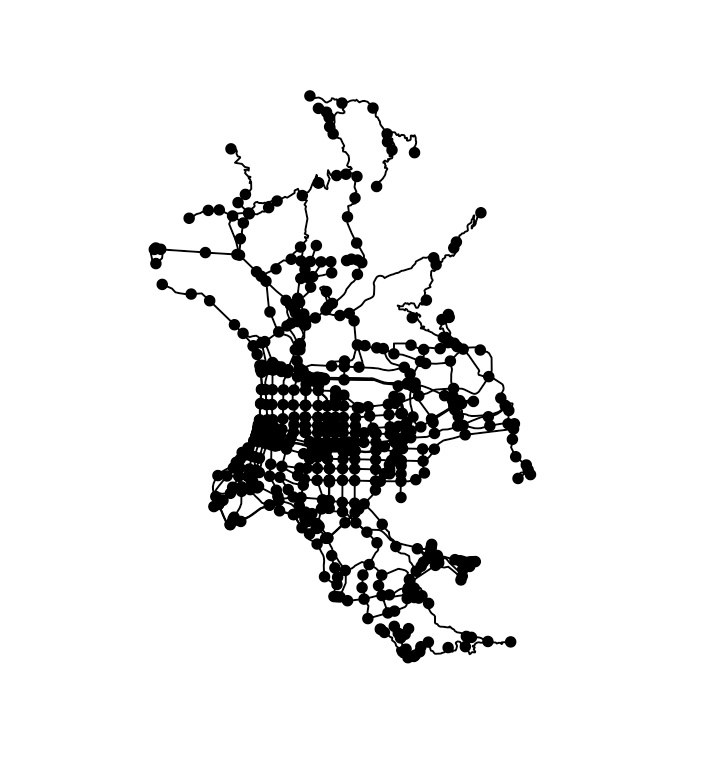
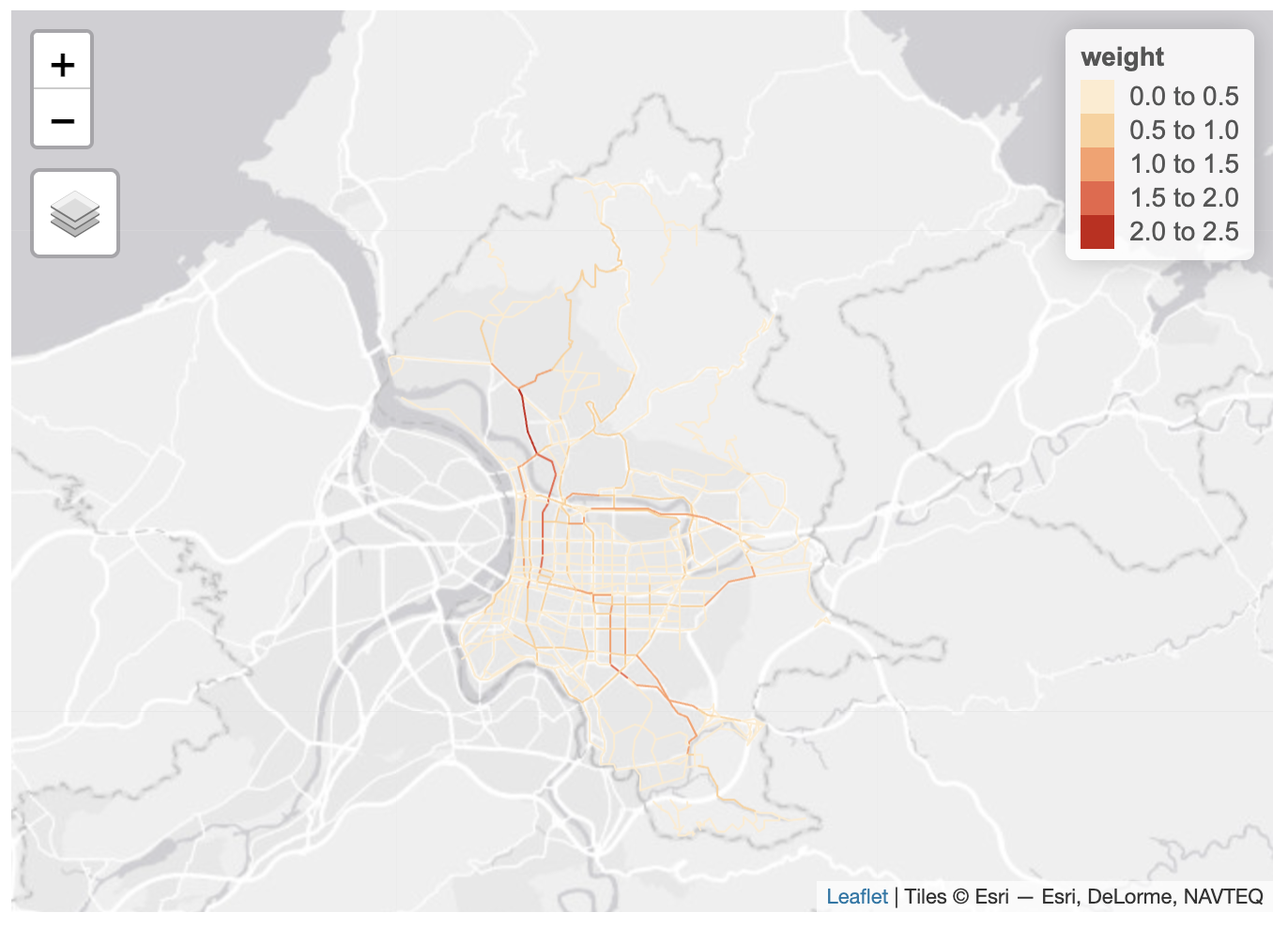
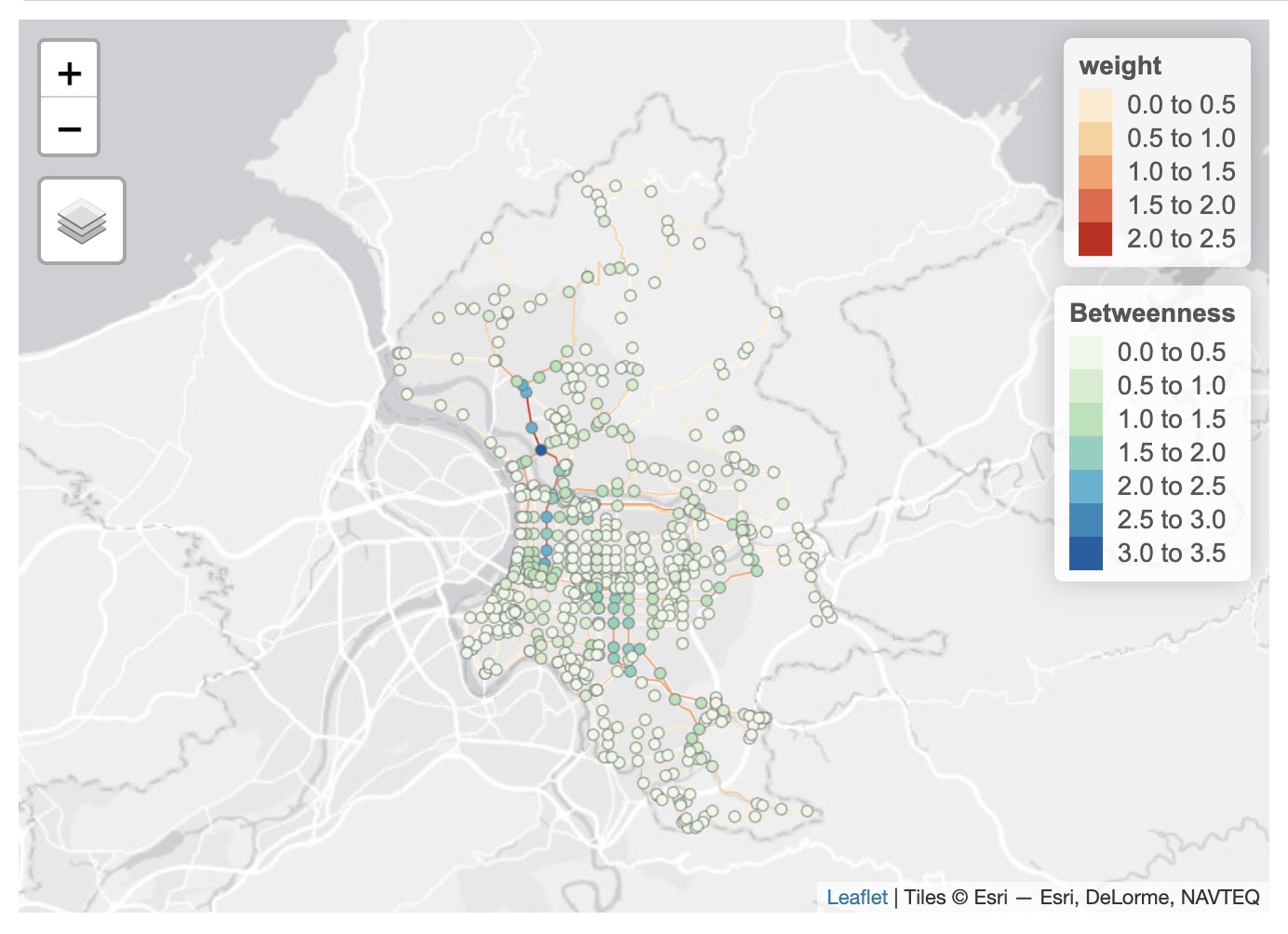
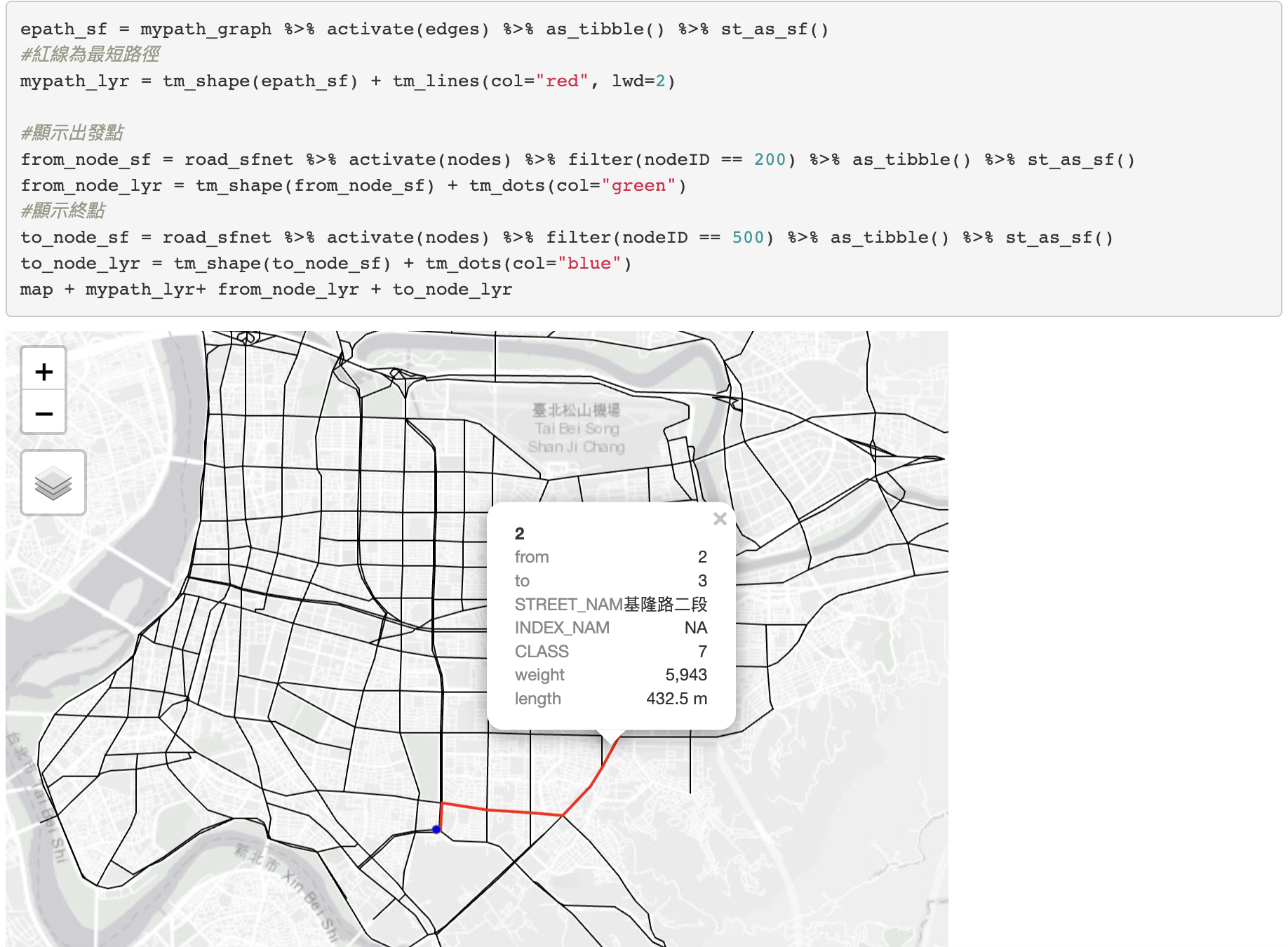
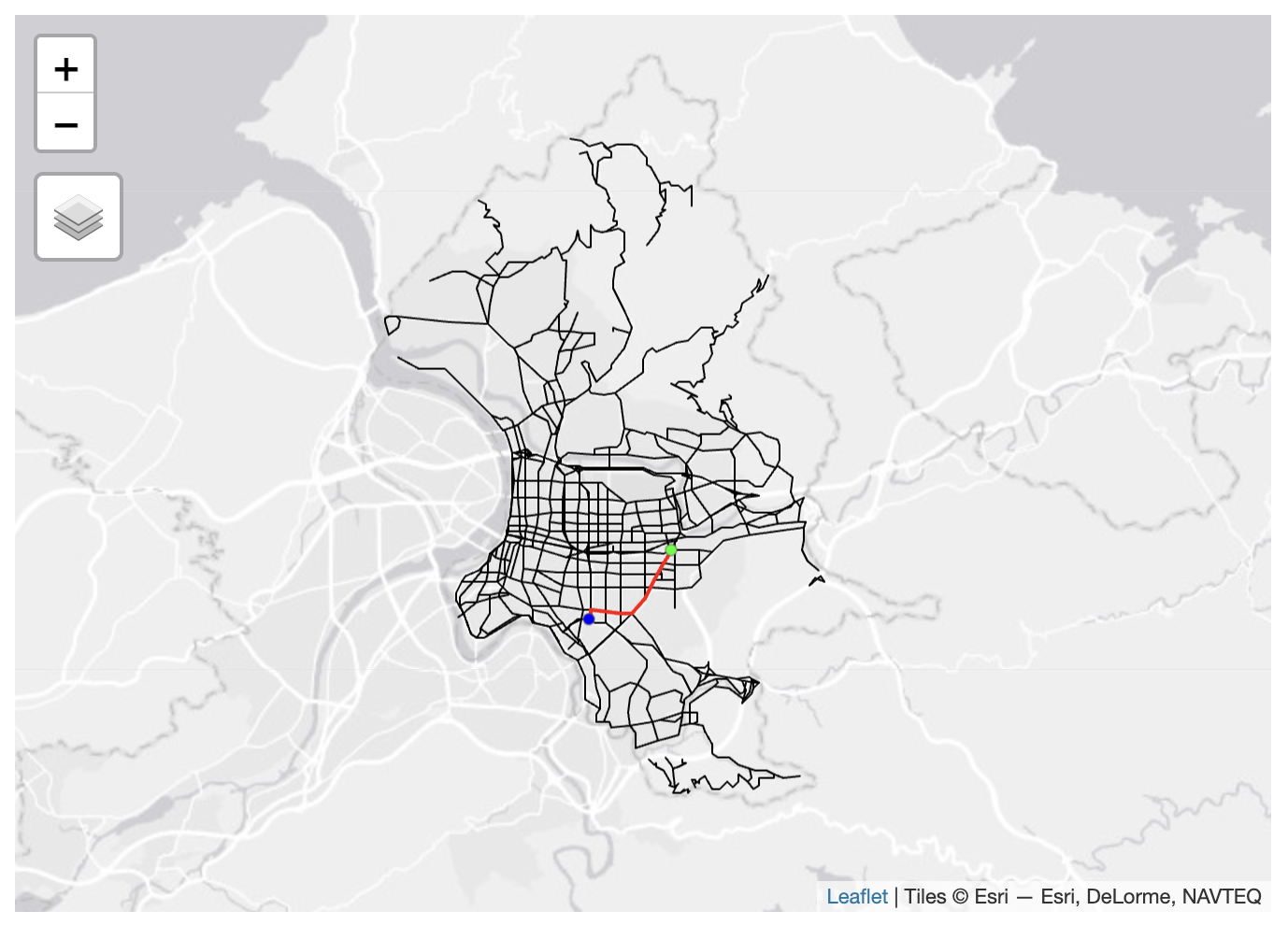
This project use Taipei roads as edges and the intersection of roads as nodes to conduct a network anlaysis for the shortest route for the given two nodes.
2021-2 Network Data Analysis and Models Project :Shortest Route Analysis in Taipei, Taiwan
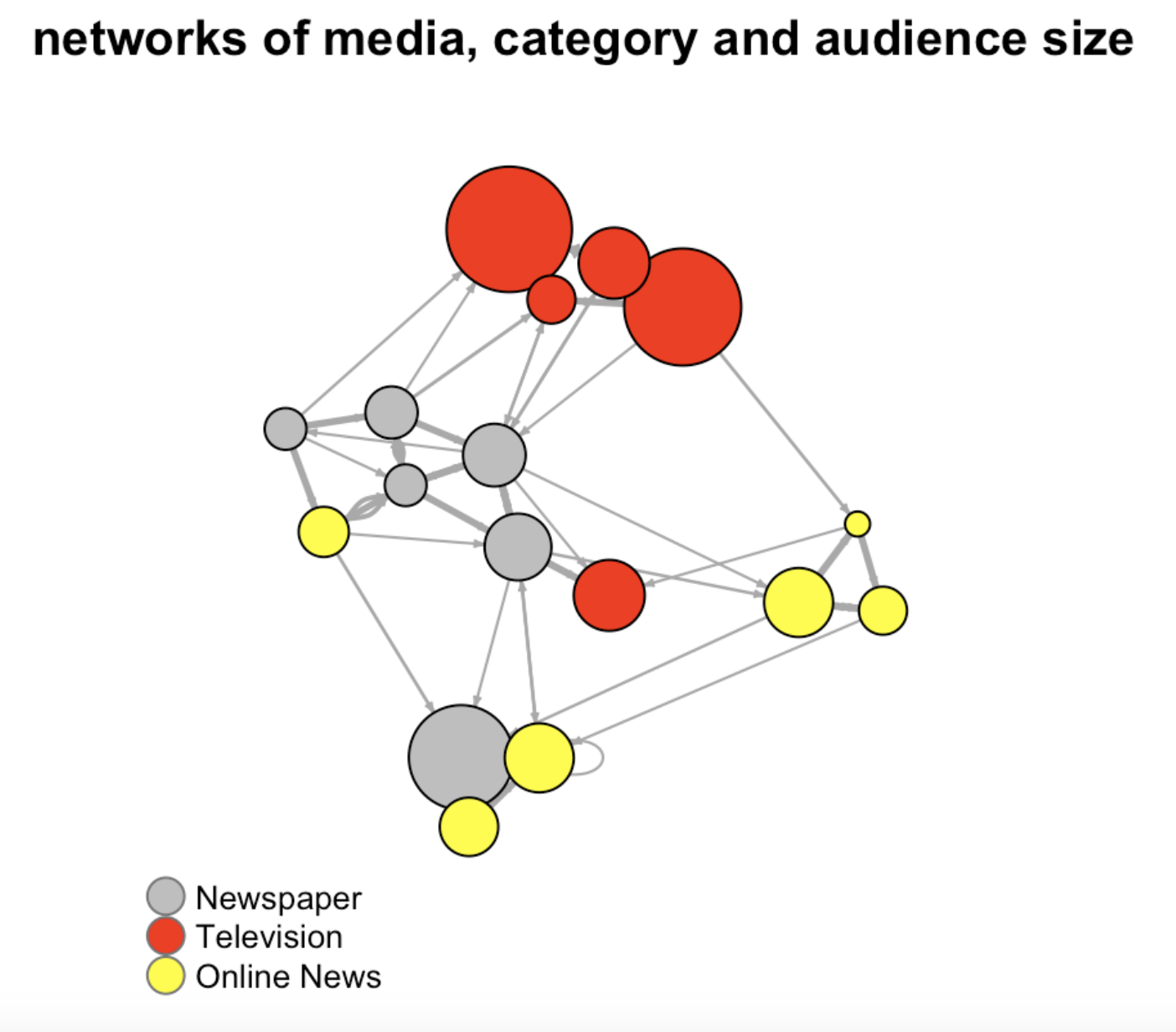
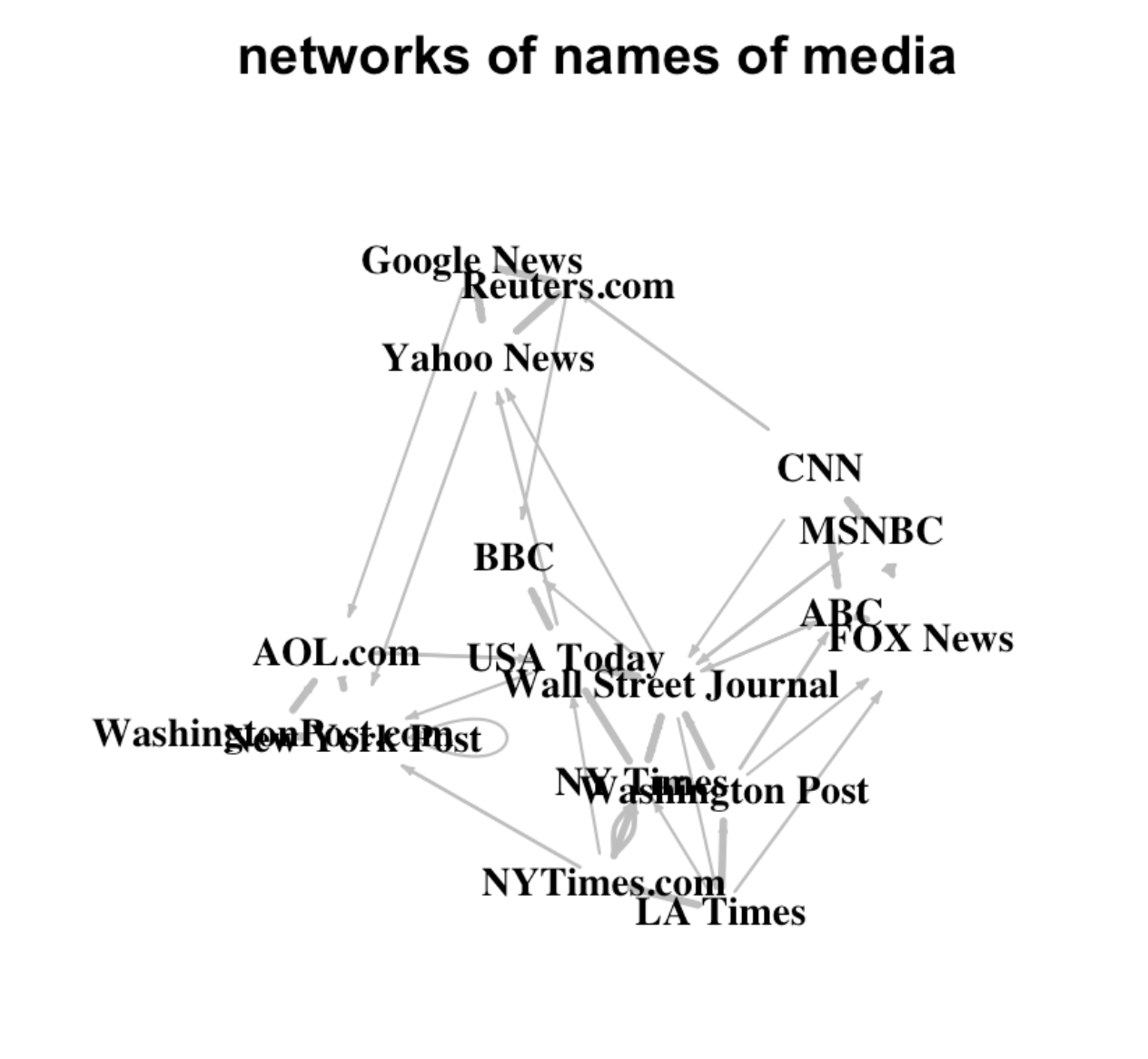
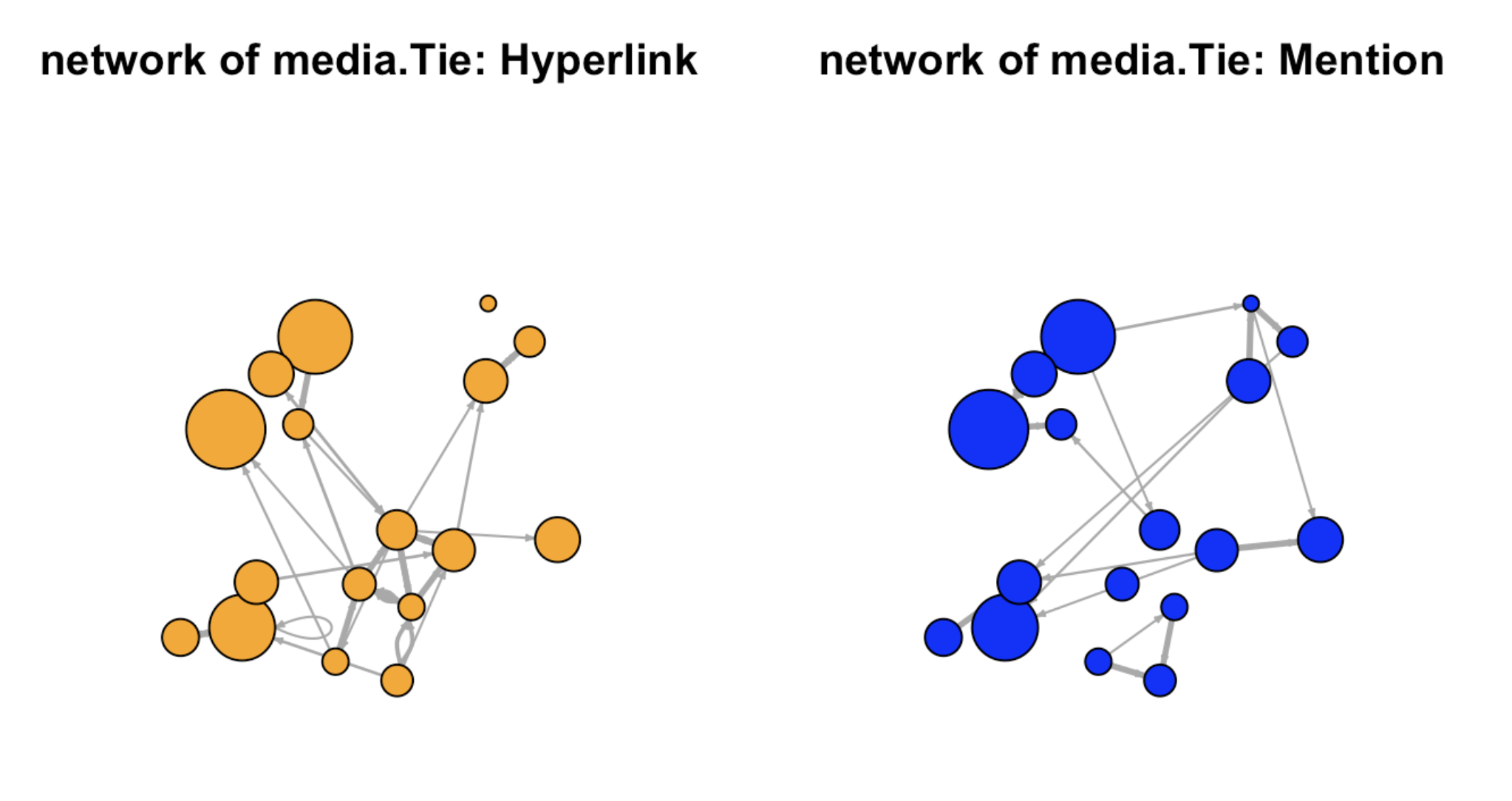
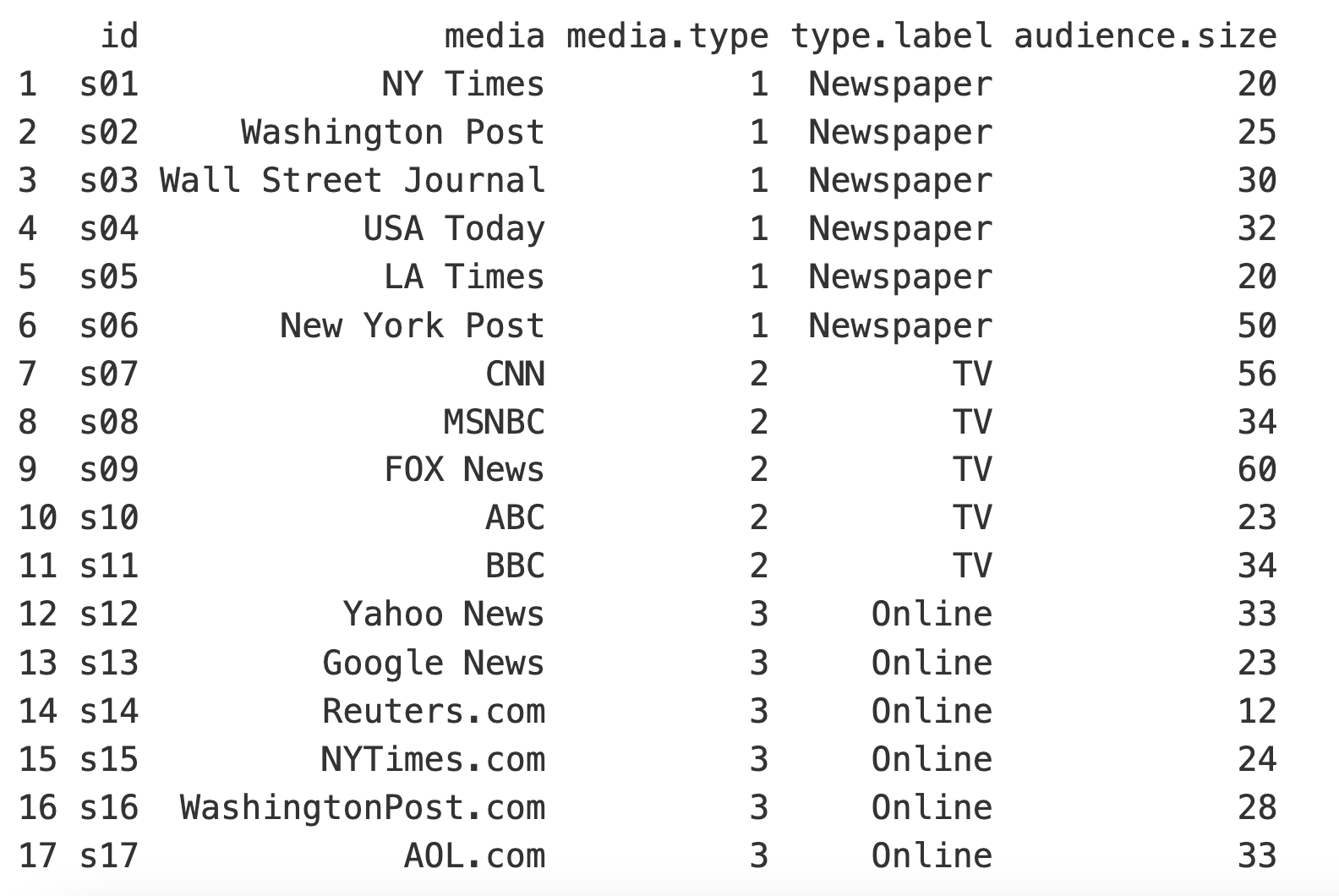
This project use R language to conduct network anlysis for media companies.I firstly analyzed the node size by [audience.size] edge width by [weight] and explore the complicated relation among large media companies.
2021-2 Network Data Analysis and Models Project 1: Network Analysis-Edges and Nodes of Media Companies
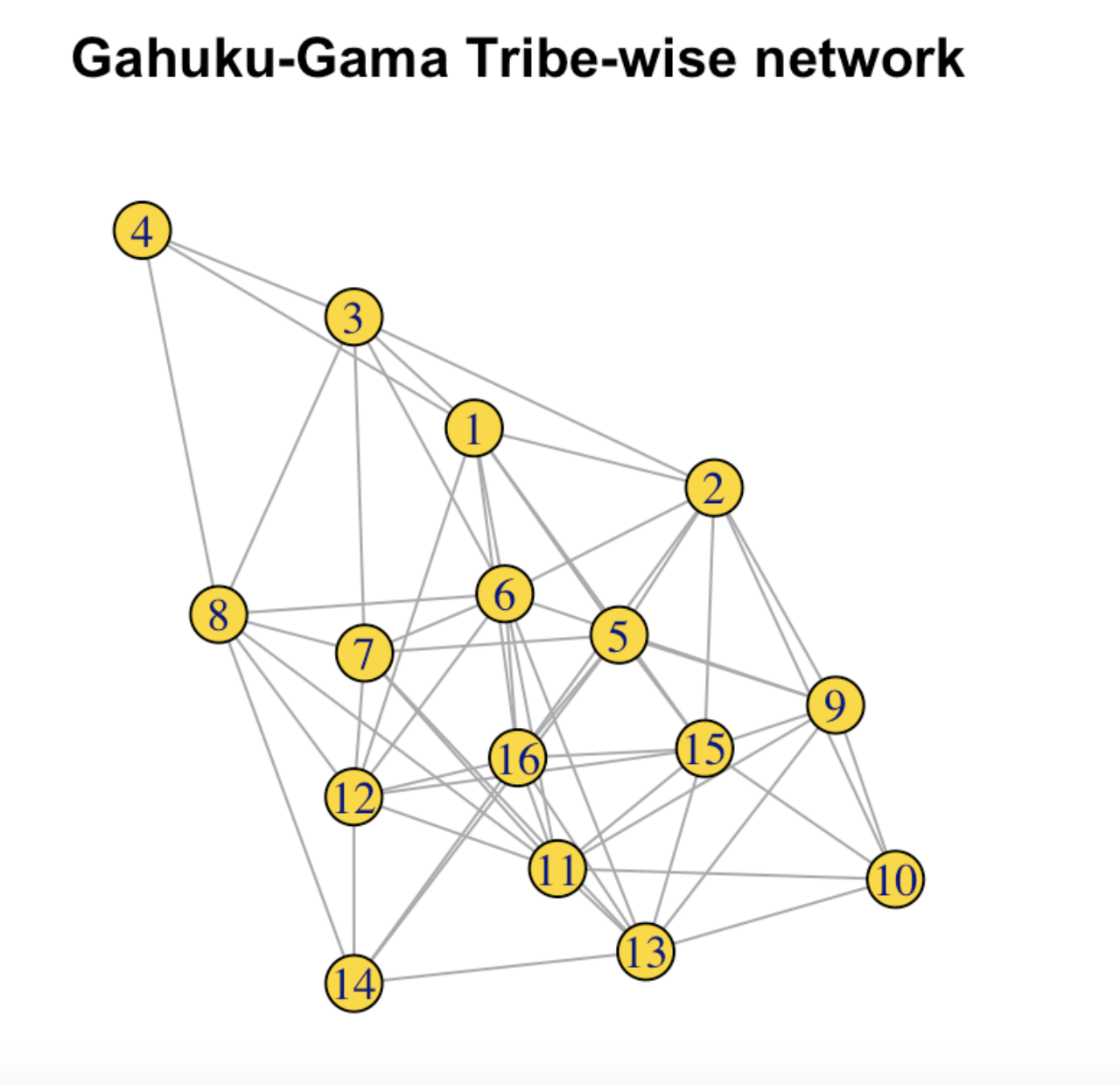
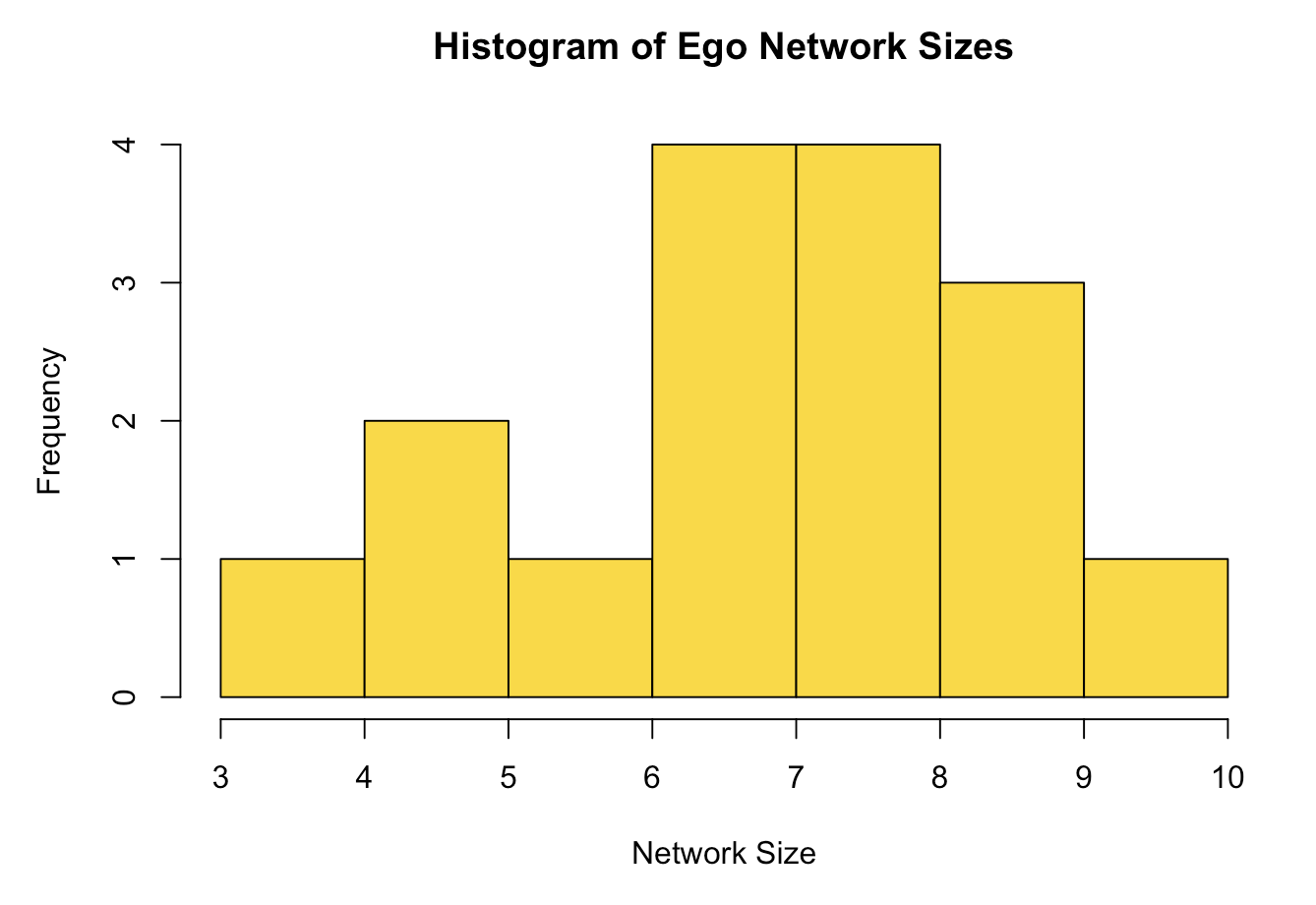
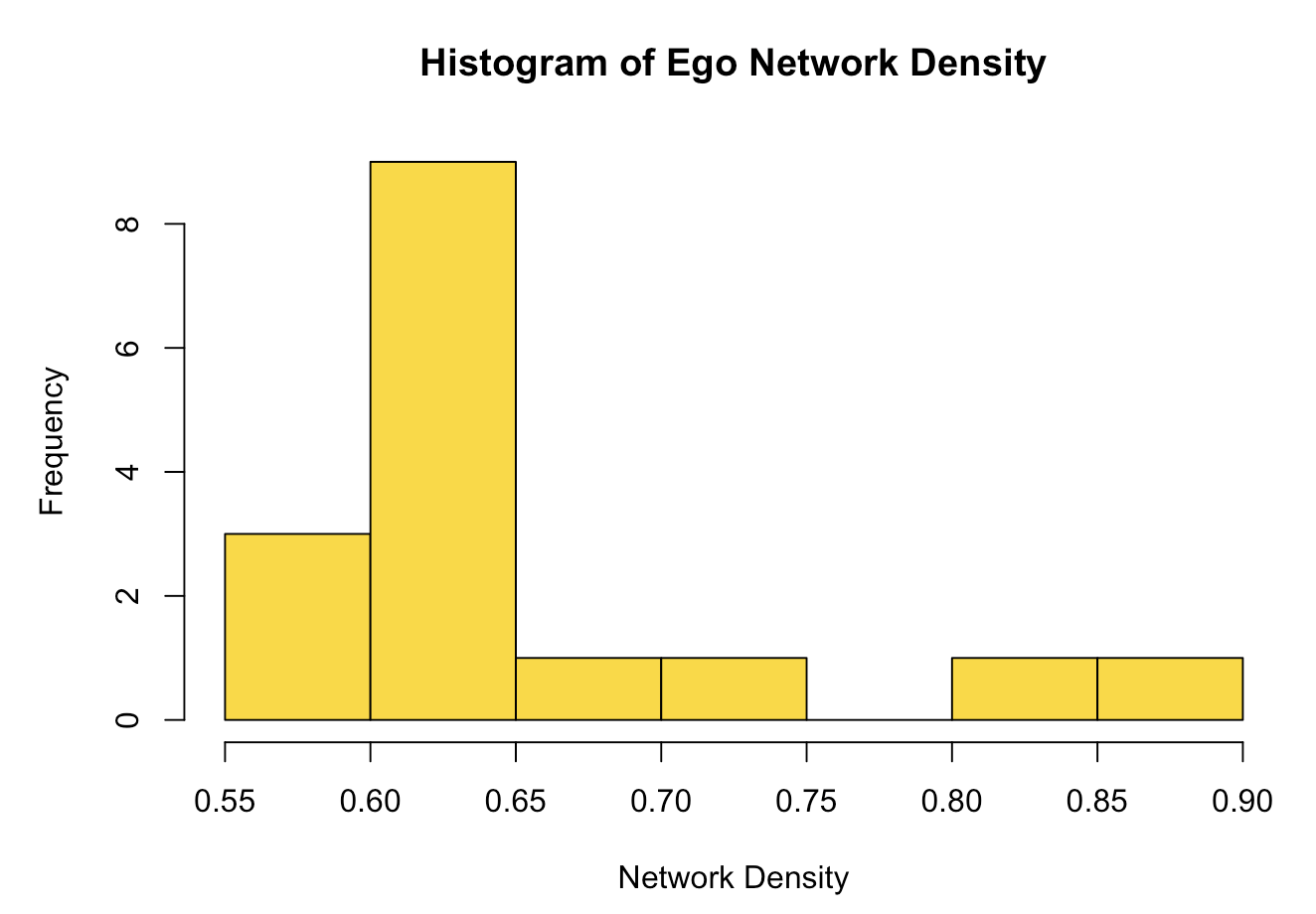
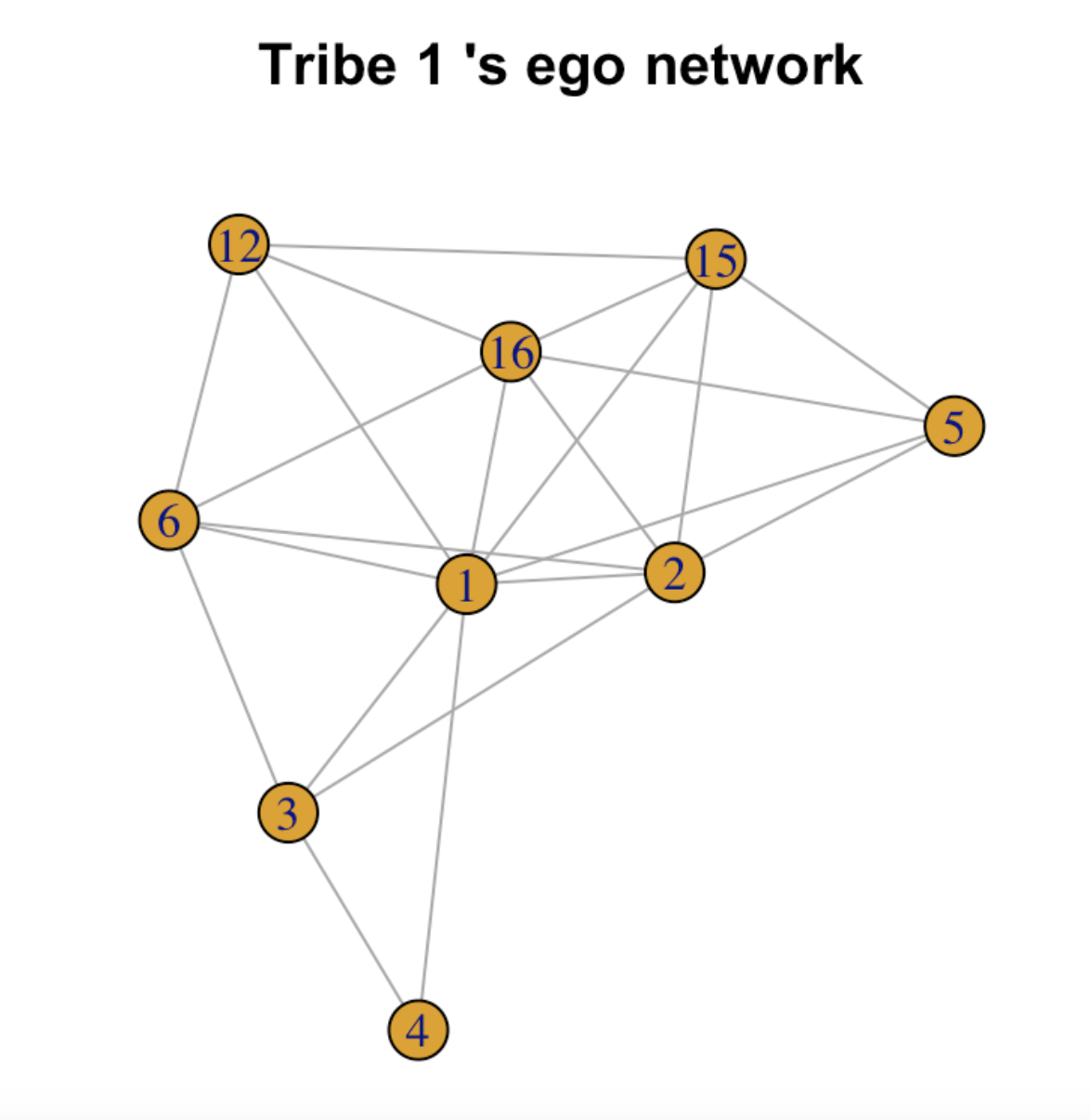
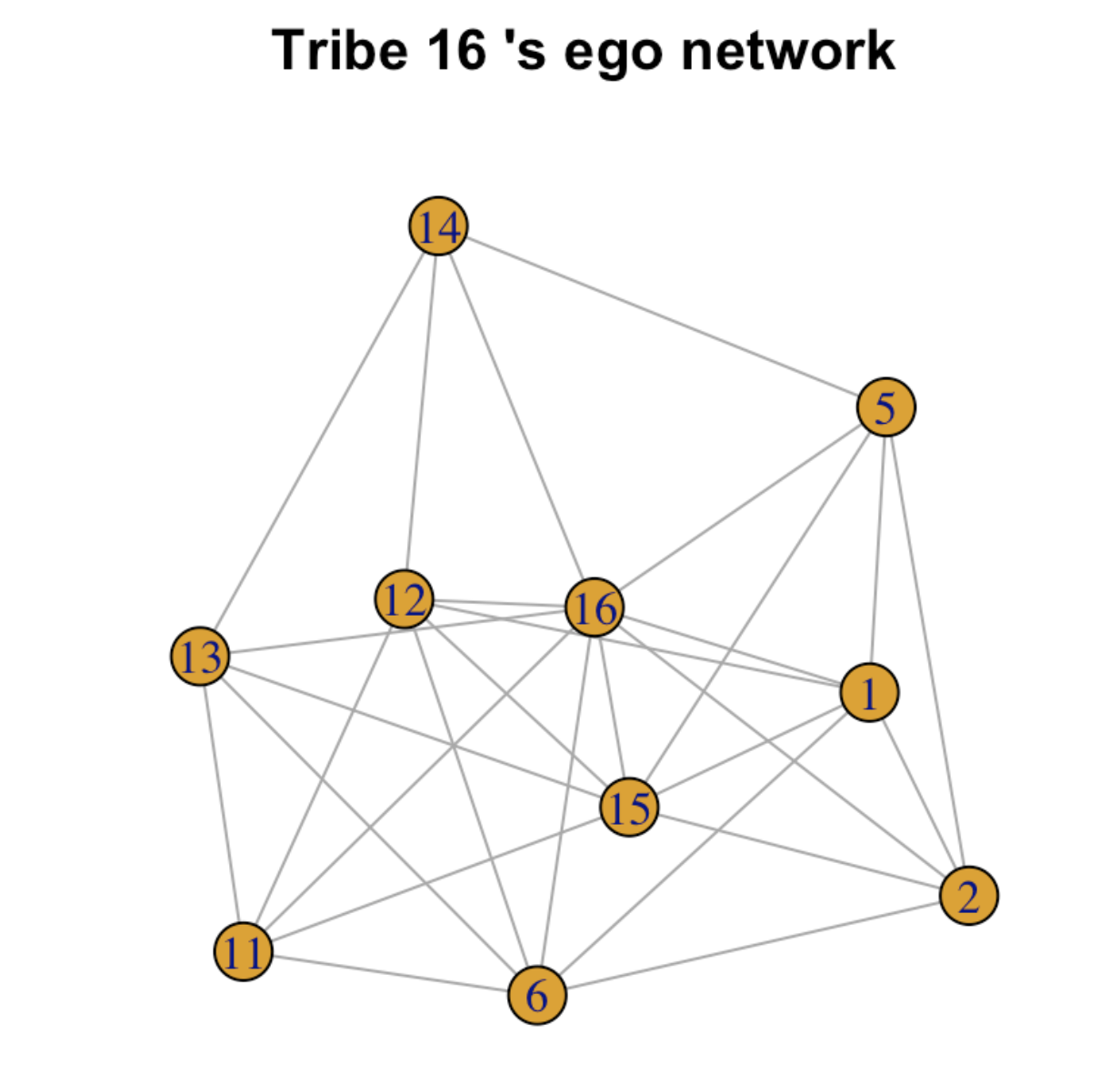
Data: soc-tribes.txt ok. This work explre the data represents the tribal social network of the Gahuku-Gama alliance in the Eastern Highlands of New Guinea. The network format is edge-list; nodes represent tribes, and connections represent friendship relationships between tribes. Draw the ego-network of each tribe, calculate individual network indicators for each tribe (as listed below), and discuss which tribal network structures are more competitive.[1] Size; [2] Density; [3] Effective size; [4] Efficiency; [5] Constraint.
2021-2 Network Data Analysis and Models Project 2: Project 2:Tribal social network of the Gahuku-Gama alliance in New Guinea
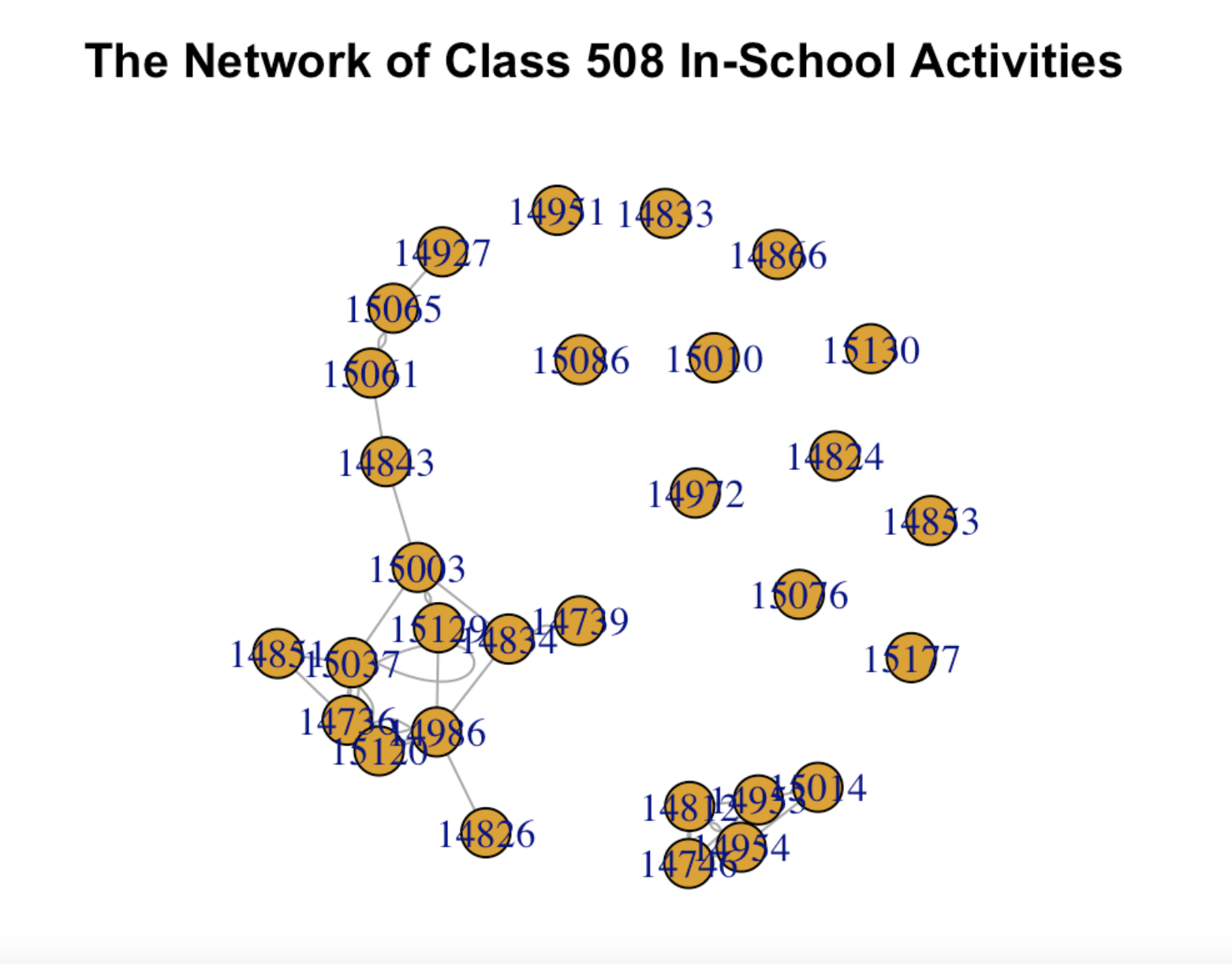
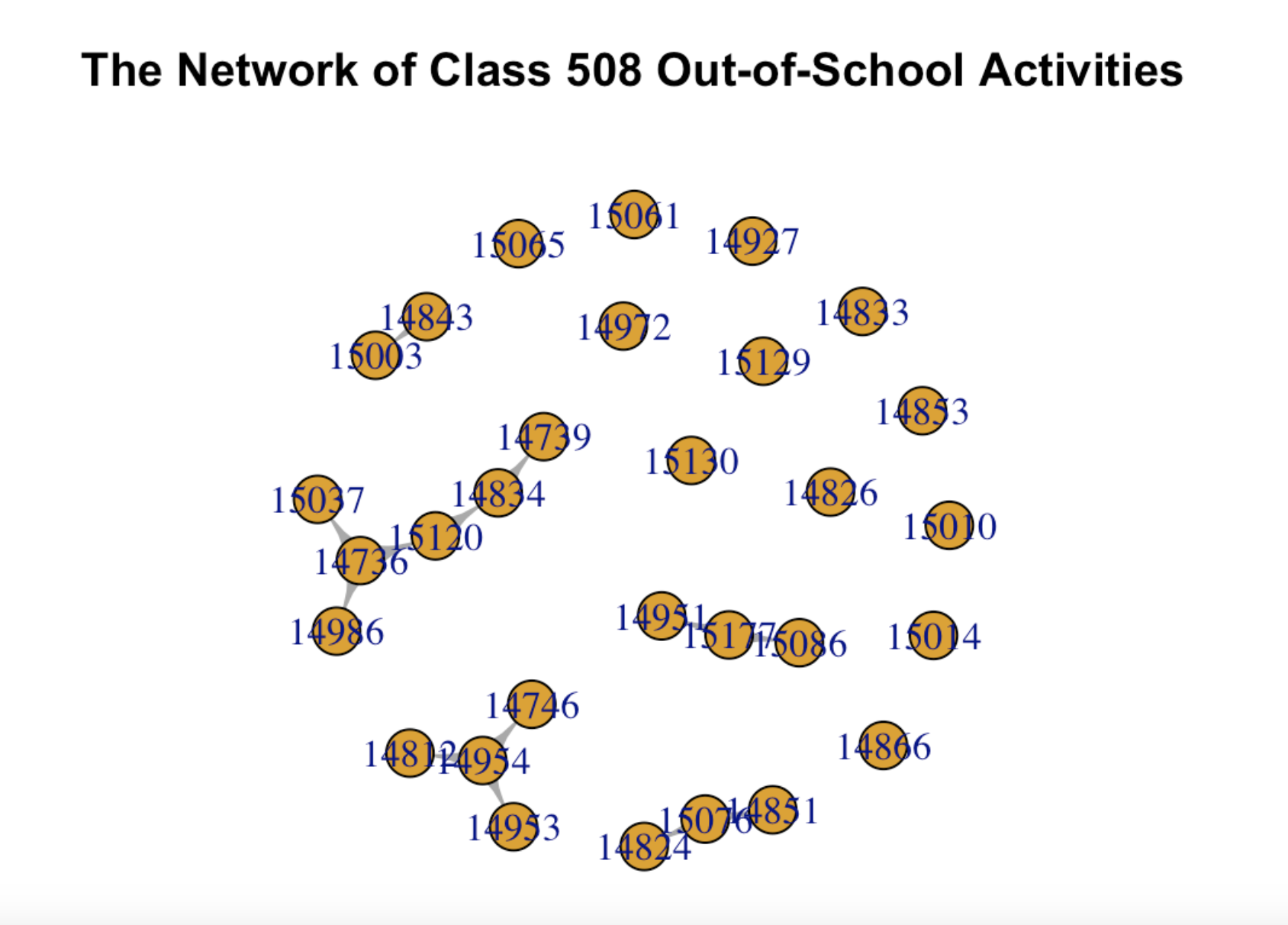
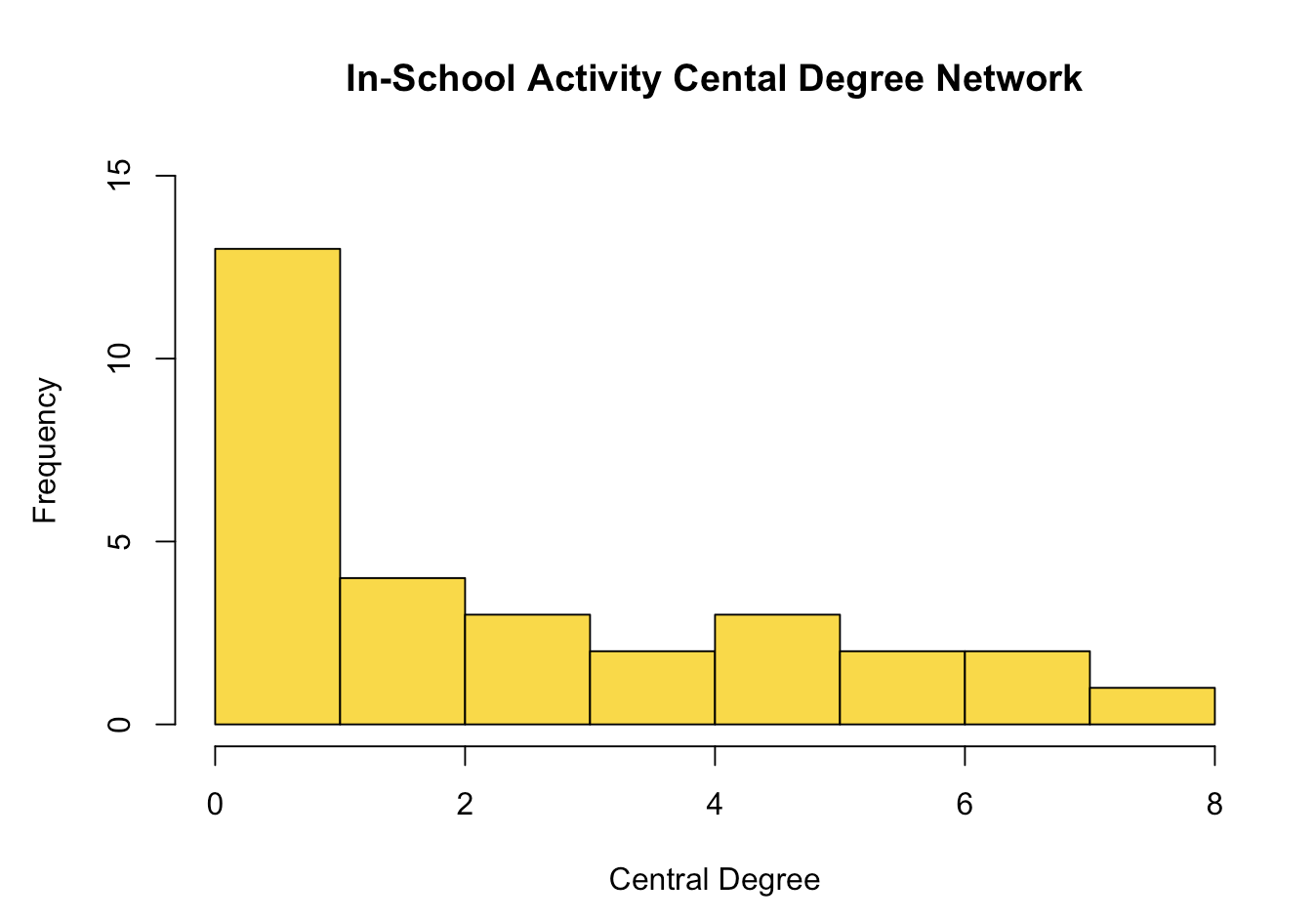
利用 data(studentnets.peerinfl, package=“NetData”) 提供的資料表(https://www.rdocumentation.org/packages/NetData/versions/0.3/topics/peerinfl),檢視 sem1, sem2資料表的欄位std_id / alter_id,表示某班級兩學期的同學友誼的指認關係。此處調查某學期的各班同學指認不同類型的朋友關係的調查。 篩選出班級(cls_id)為508的edges,再針對會一起「參加學校活動(acta)」以及「參加校外活動(nacta)」的關係,分別建立好友網絡,計算network centrality的各種指標(利用套件的函數),比較這些同學在班上人際網絡的關係(如比較每個人在「學校活動」網絡與「校外活動」網絡的差異等)。
欄位說明: • std_id - student id • alter_id - alter id • cls_id - class id • acta - In school activities (1 = yes, 0 = np) • nacta - Non-school activities (1 = yes, 0 = no)
How we measure the centrality:Freeman’s Measures: Degree, closeness, and betweenness Network-level centralization: More indices: Information centrality and Eigenvector centrality Directed network centrality: HITS and PageRank algorithms Spatial network centrality: Geo-location + PageRank
2021-2 Network Data Analysis and Models Project 3:Activity participitation network in School
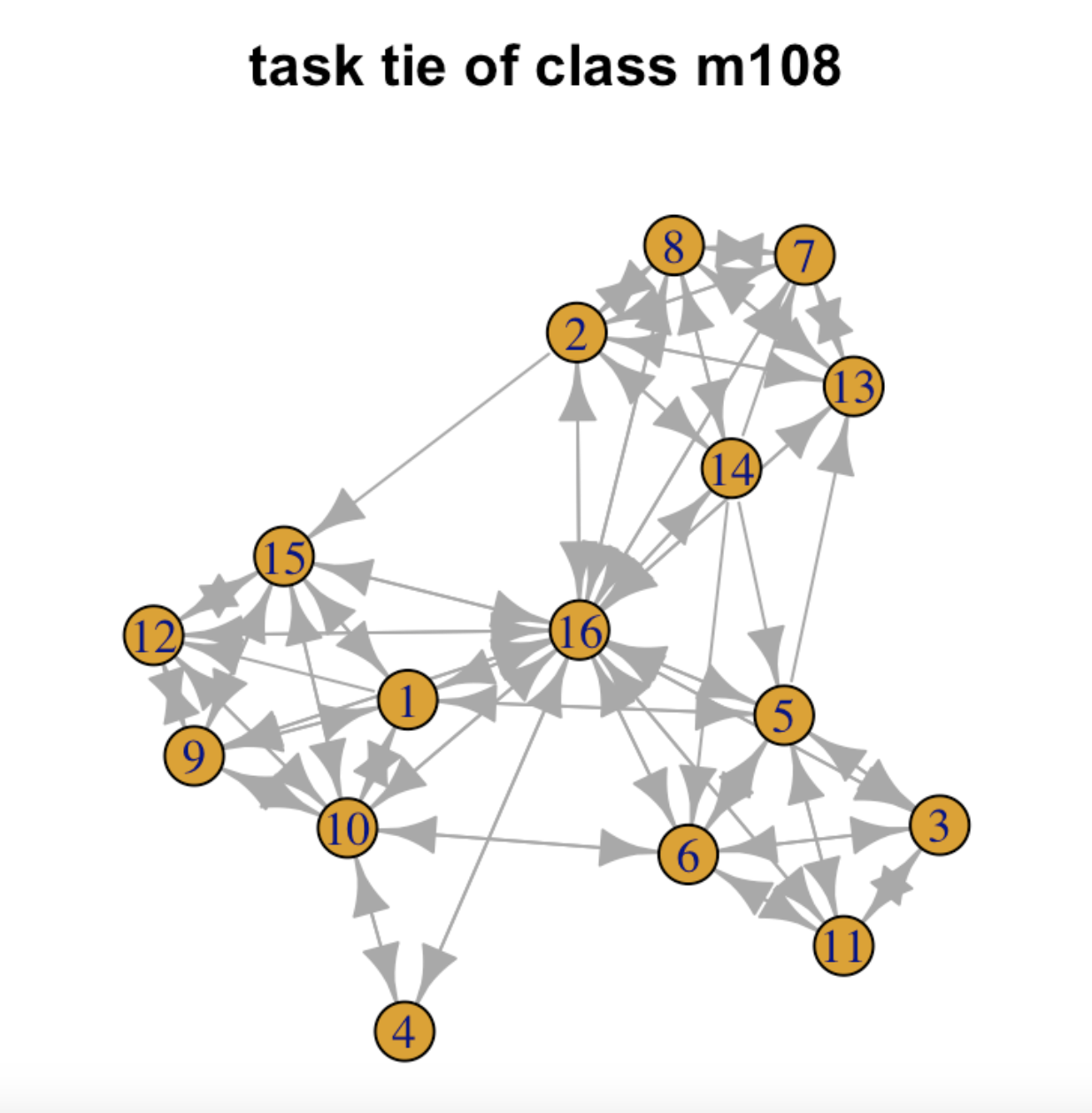
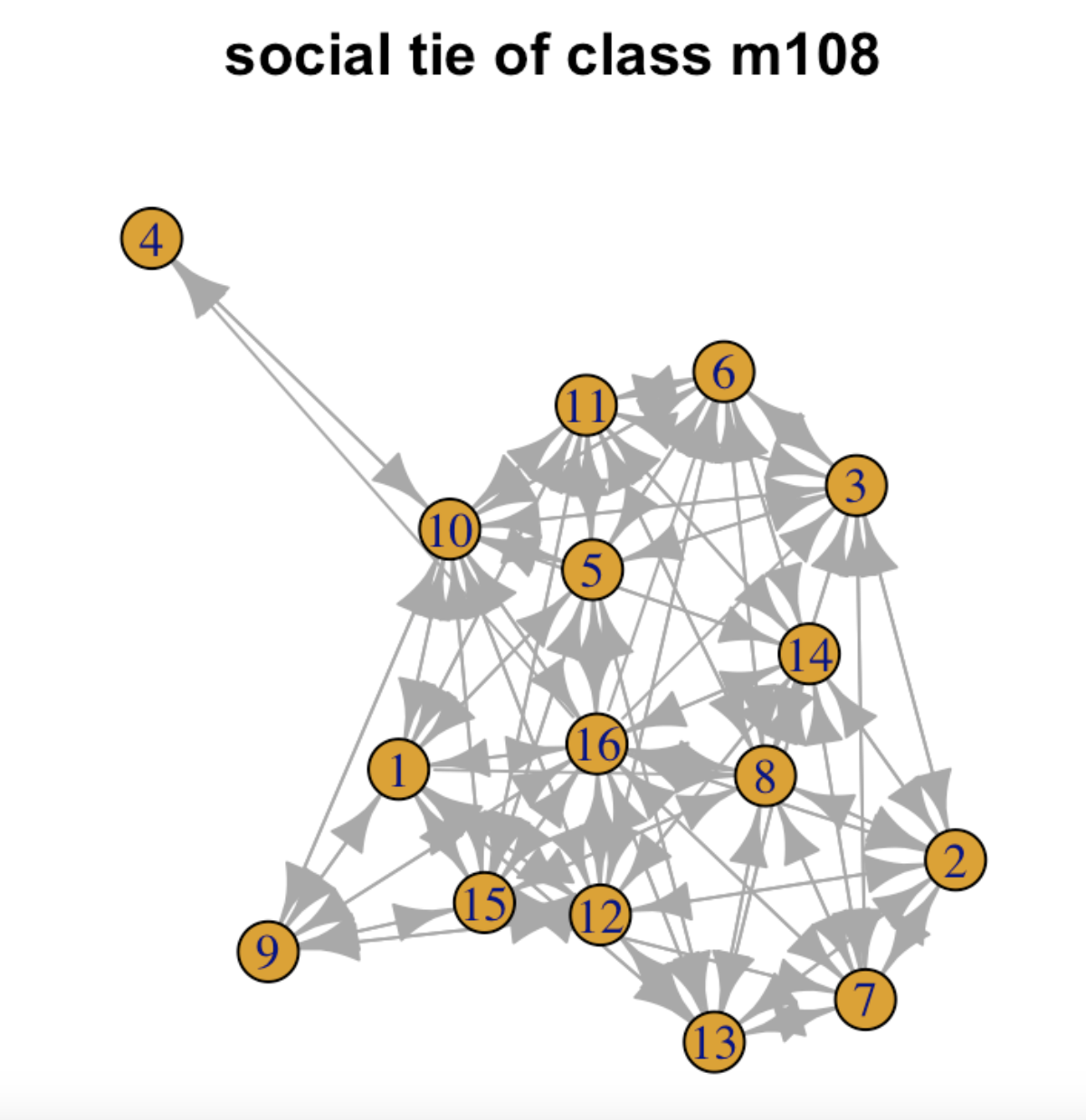
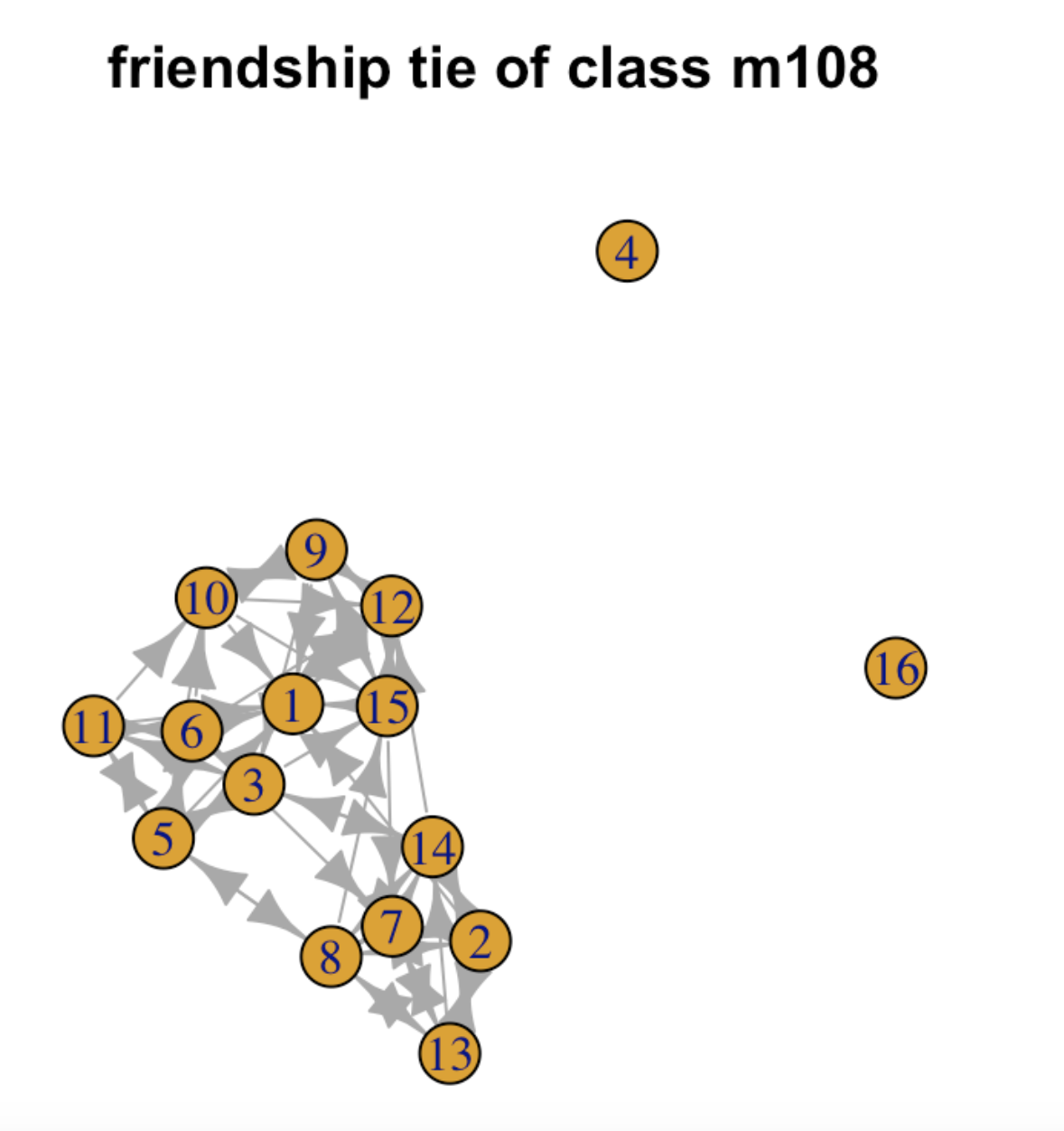
討論friendship, social and task這三種關係,m108班級成員重疊性與成員的網絡連結特性。從繪圖當中可以看到,班上一共有16為學生,而在friendship 的連結上,4號同學以及16號同學沒有與任何其他人有連結,為孤立的節點,可以推測為並無與班上其他同學建立友誼,是班級邊緣人。
然而,在social以及task的關係中,就班級所有16個人都有連結。 從Centrality 指標的角度來看,若比較degree,班級上連結的中心強度,綜觀全班的網絡,最強的是social,再來是task,最弱是friendship。其中很特別的是,16號同學,social跟task的中心性都最強,但是friendship=0,這樣的同學,可能就是在網絡當中,不講究情感需求,是任務以及社交工具論導向。 從Sub groups 指標的角度來看,綜觀全班的網絡,小圈圈最大的是的是social,再來是task,最弱是friendship,有一些小圈圈有0人,也就是完全沒朋友,出現在friendship,而班上有幾位朋友王,他們的小區圈圈則有5為朋友。社交取向的小圈圈最多有7人,任務取向的小圈圈最多有5人。
Discussion on the overlap between friendship, social, and task relationships among members of class M108, along with the characteristics of their network connections: From the visualization, it can be observed that there are a total of 16 students in the class. Regarding friendship connections, student 4 and student 16 do not have any connections with other classmates, making them isolated nodes. It can be inferred that they haven't established friendships with any other classmates, indicating they are on the periphery of the class.
However, in social and task relationships, all 16 students in the class have connections. Looking at centrality indicators, if we compare the degrees, which represent the strength of connections in the class network, it's evident that social connections are the strongest, followed by task connections, while friendship connections are the weakest. Notably, student 16 has the strongest centrality in both social and task relationships, but their friendship centrality is zero. This suggests that this student may prioritize task accomplishment and social interactions over emotional needs in the network. Looking at subgroup indicators, the largest subgroups in the class network are social, followed by task, with friendship being the weakest. Some subgroups have zero members, indicating complete lack of friends in the friendship aspect. Additionally, there are a few students who are "friend kings," with subgroups of five friends. Social-oriented subgroups can have a maximum of seven members, while task-oriented subgroups can have a maximum of five members.
2021-2 Network Data Analysis and Models Project 4:Friendship, social and task network in a class
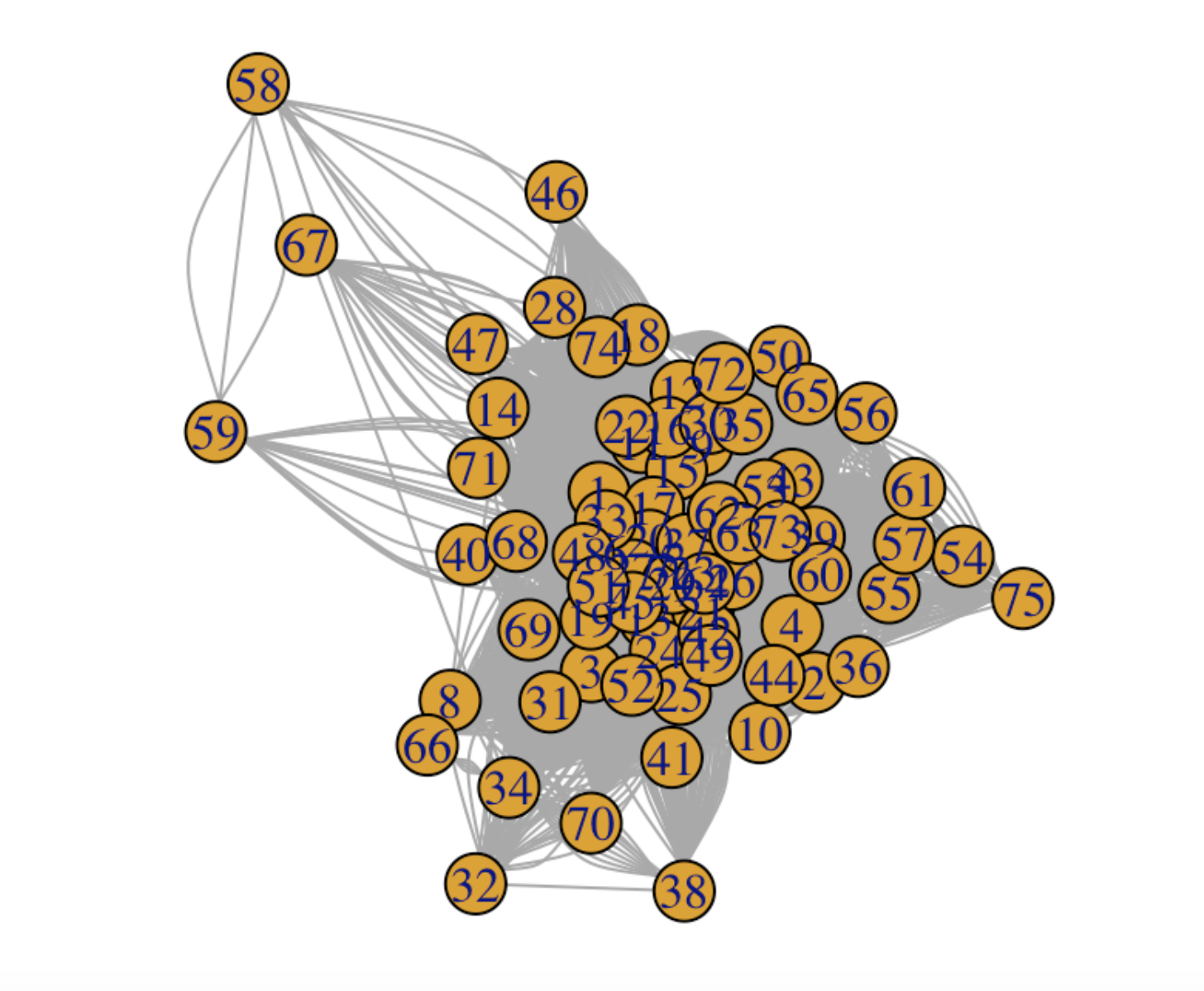
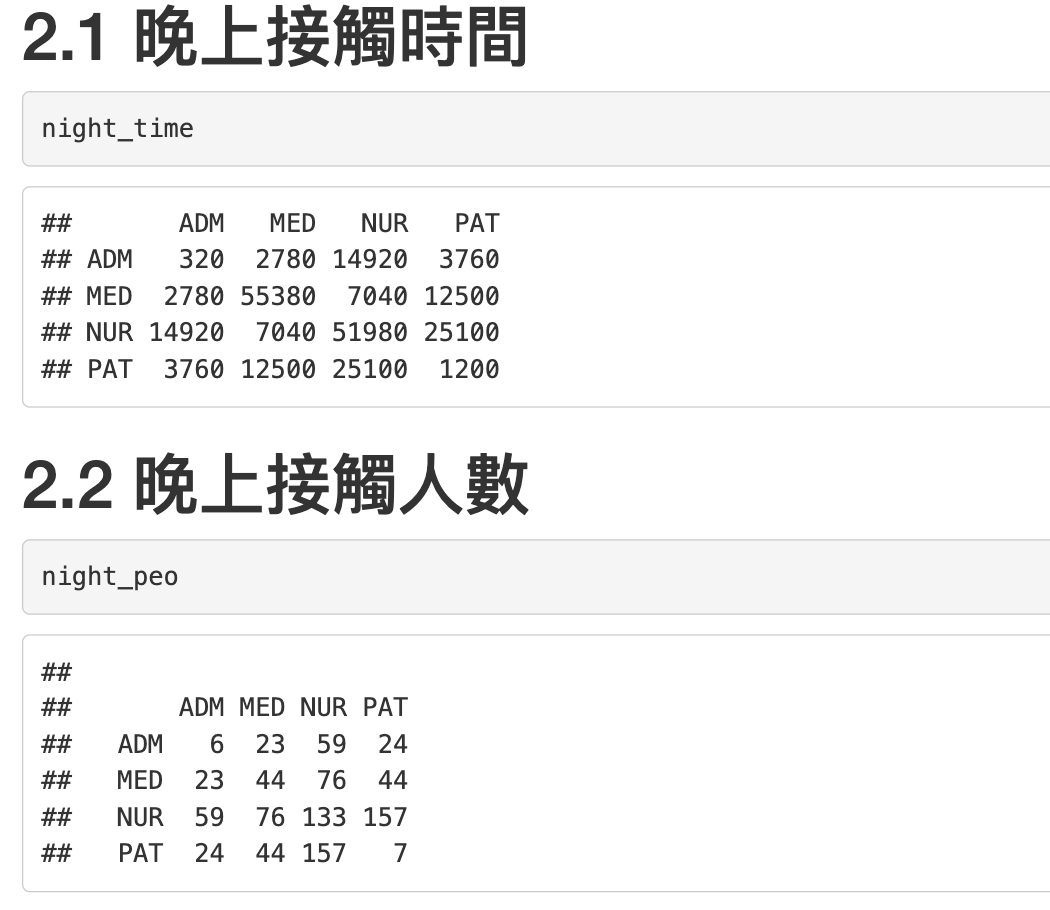
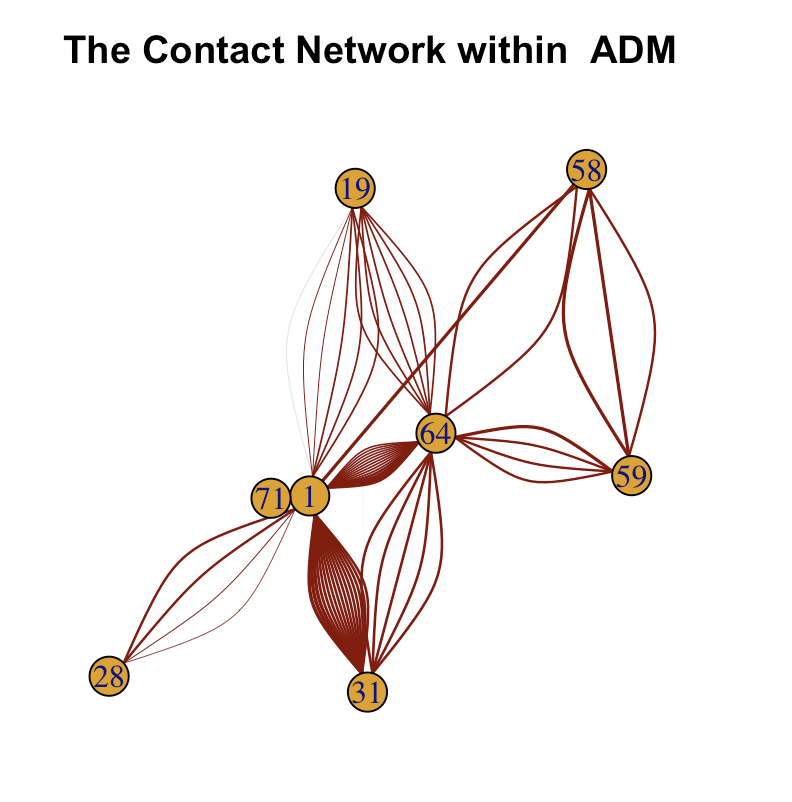
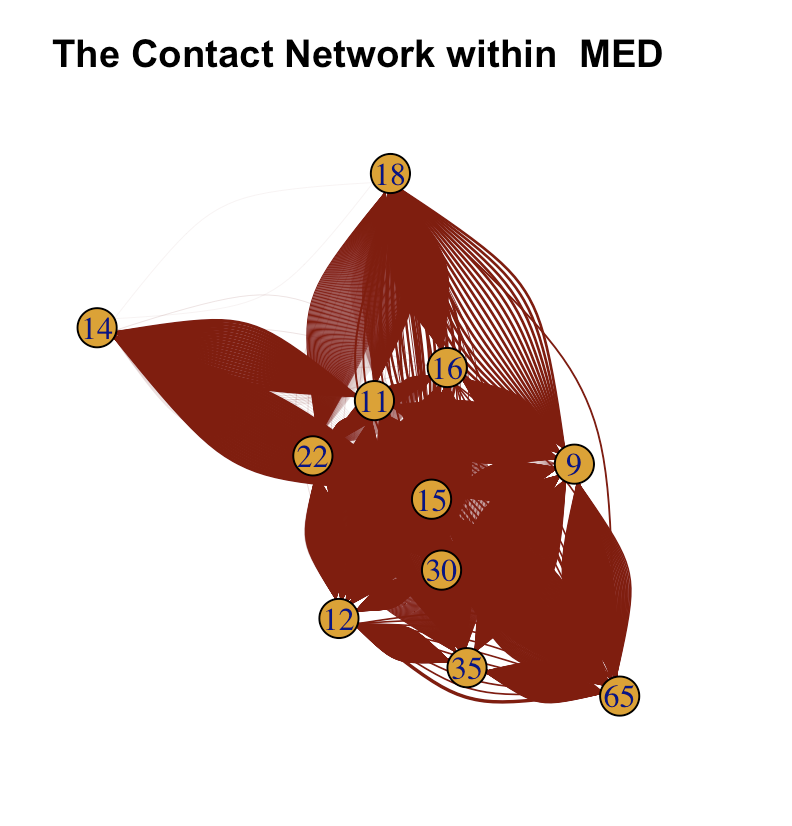
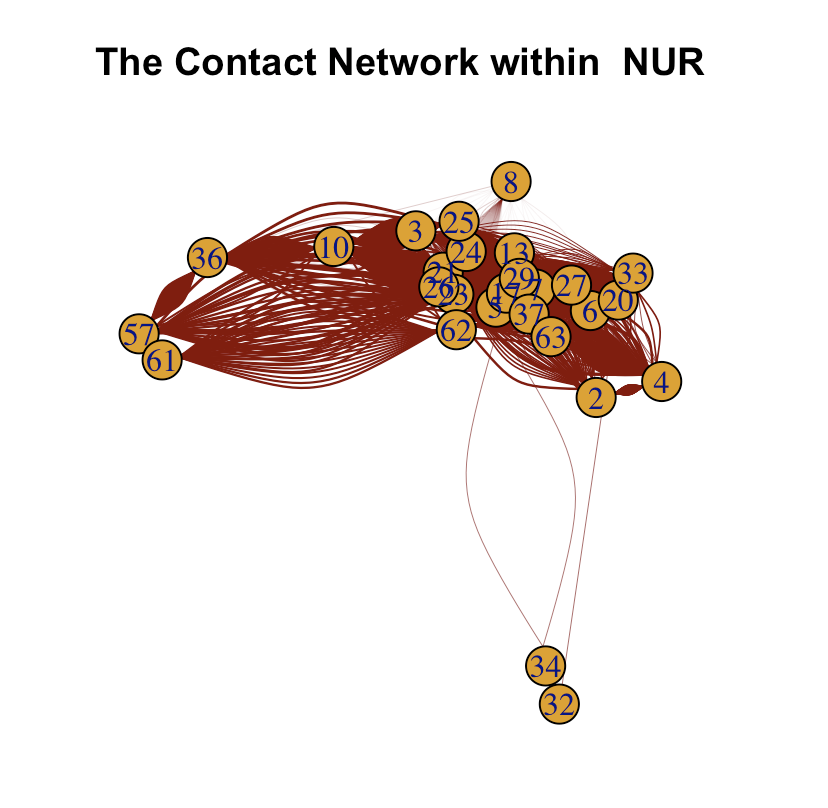
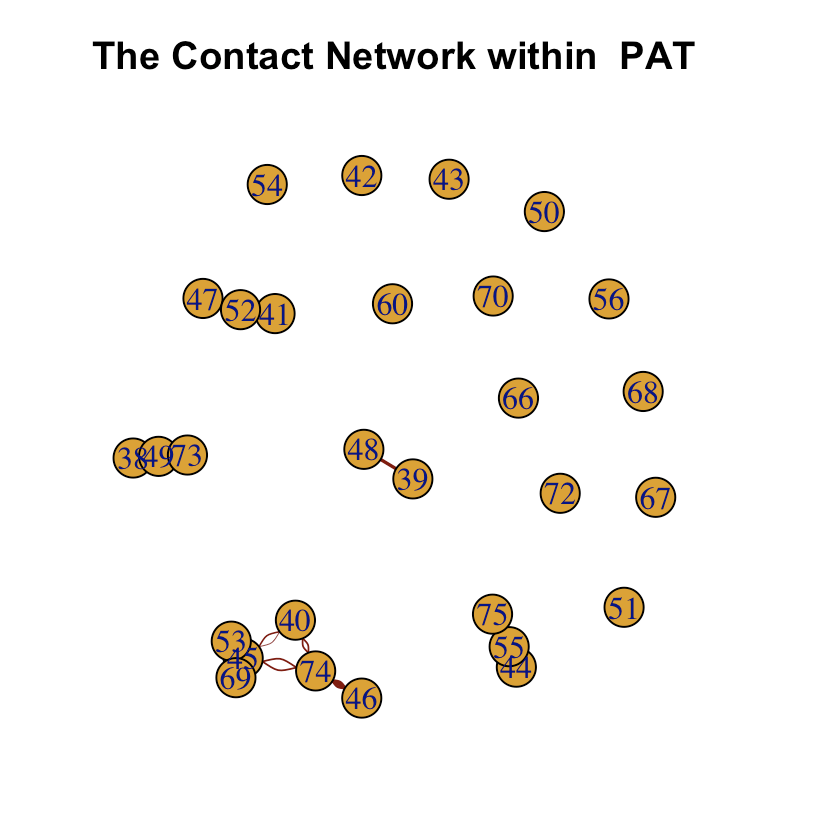
This project explored a comprehensive record of interpersonal contacts within the geriatric unit of a hospital situated in Lyon, France, during a crucial timeframe spanning from 1 pm on Monday, December 6 to 2 pm on Friday, December 10, in the year 2010. This dataset encapsulates the interactions among 75 individuals, including patients and various healthcare professionals, who willingly wore RFID sensors on their identification badges throughout the specified period. These sensors meticulously captured instances of face-to-face contact between any two individuals, defined within the proximity range of 1-1.5 meters, occurring within discrete 20-second intervals.
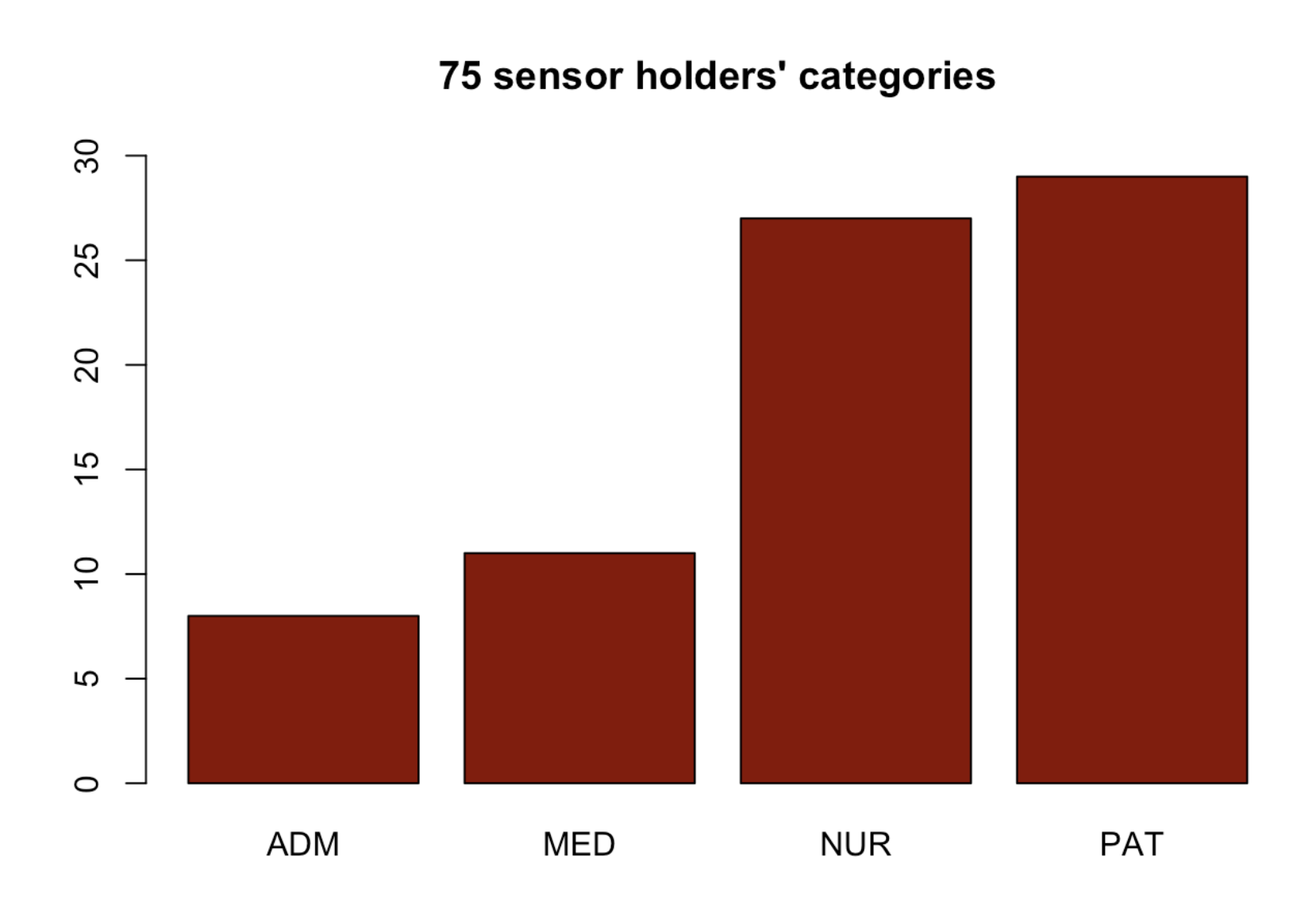
Within this dataset, each individual is categorized by a distinct status code, delineating their roles within the healthcare ecosystem: ADM (Administrative staff), MED (Physicians), NUR (Nursing staff), and PAT (Patients). Moreover, the edges of the network are annotated with attributes denoting the duration of contact, measured in seconds.
The primary objective of this study revolves around elucidating the intricate interaction dynamics prevalent among different personnel categories within the hospital, discerning patterns across various time periods—daytime, evening, and late night. Specifically, the analysis aims to quantify both the frequency and duration of contacts to gain deeper insights into the potential transmission pathways of nosocomial infections, such as the COVID-19 virus. Additionally, this study delves into the crucial task of identifying "super spreaders," individuals exhibiting heightened interaction frequencies, and proposes strategies for implementing targeted isolation measures to curb the spread of infectious diseases within healthcare settings.
回顧屬性代號與名稱的關係。ADM (行政人員)、MED (醫師)、NUR(護理人員)、PAT (病人)。從表上來看,在白天班的時候,病人跟護理人員的接觸人數最多,接觸時間來看,護理人員跟護理人員接觸的時間最多。晚上班的時候,病人跟護理人員的接觸人數最多。接觸時間來看,醫生跟醫生接觸的時間最多。大夜班的時候,病人跟護理人員的接觸人數最多,接觸時間來看,護理人員跟病人接觸的時間最多。 綜合來看,護理人員在大多的時間,是醫院裡接觸的人最多,且接觸時間最長的人員類別,因此最有可能是題意當中的「超級接觸者」,當Covid-19爆發時,可能有最高的風險,要進行隔離措施。 然而,拉回一開始的配戴感測器的人員選擇,ADM=8, MED=11, NUR=27 ,PAT =29 。這樣的選擇一開始就不平均,護理人員的選擇比醫師的兩倍還多,故這樣的研究設計,可能會導致具有偏見(bias)的結論,因此需要小心解釋。
2021-2 Network Data Analysis and Models Project 5:Contact time of ADM (Administrative staff), MED (Physicians), NUR (Nursing staff), and PAT (Patients) network in a hospital in Lyon, France
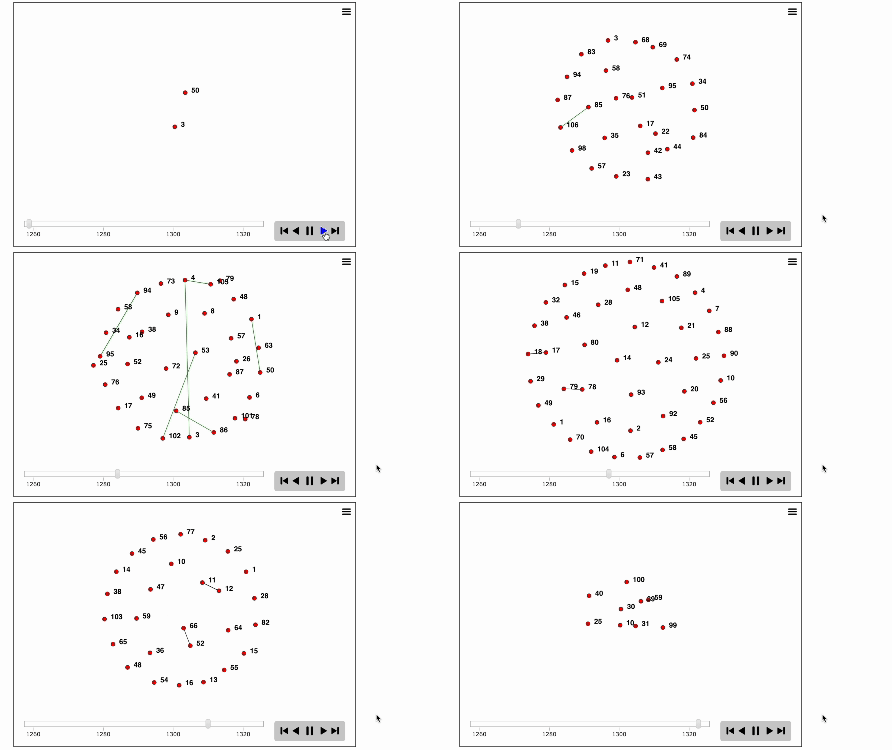
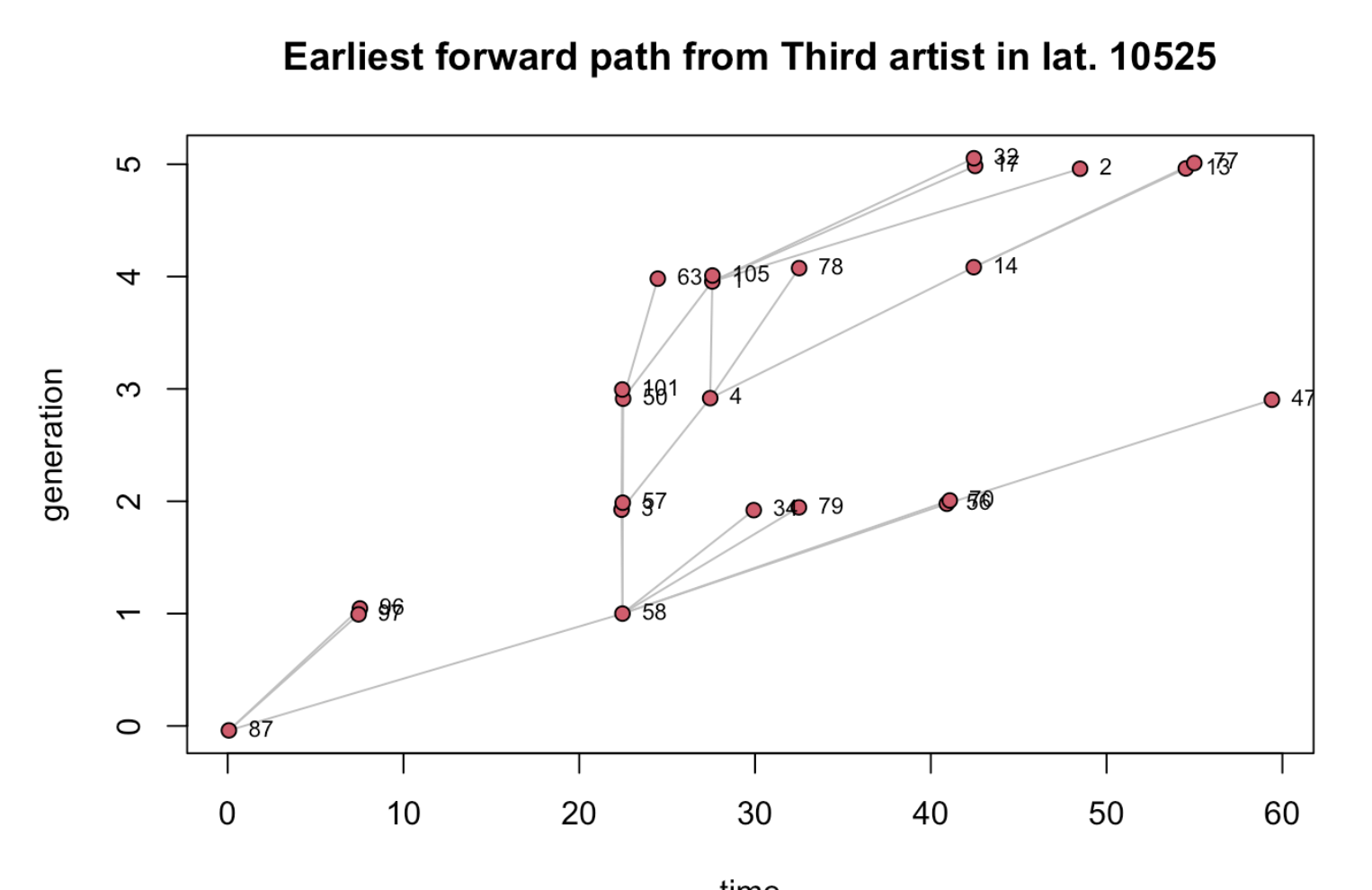
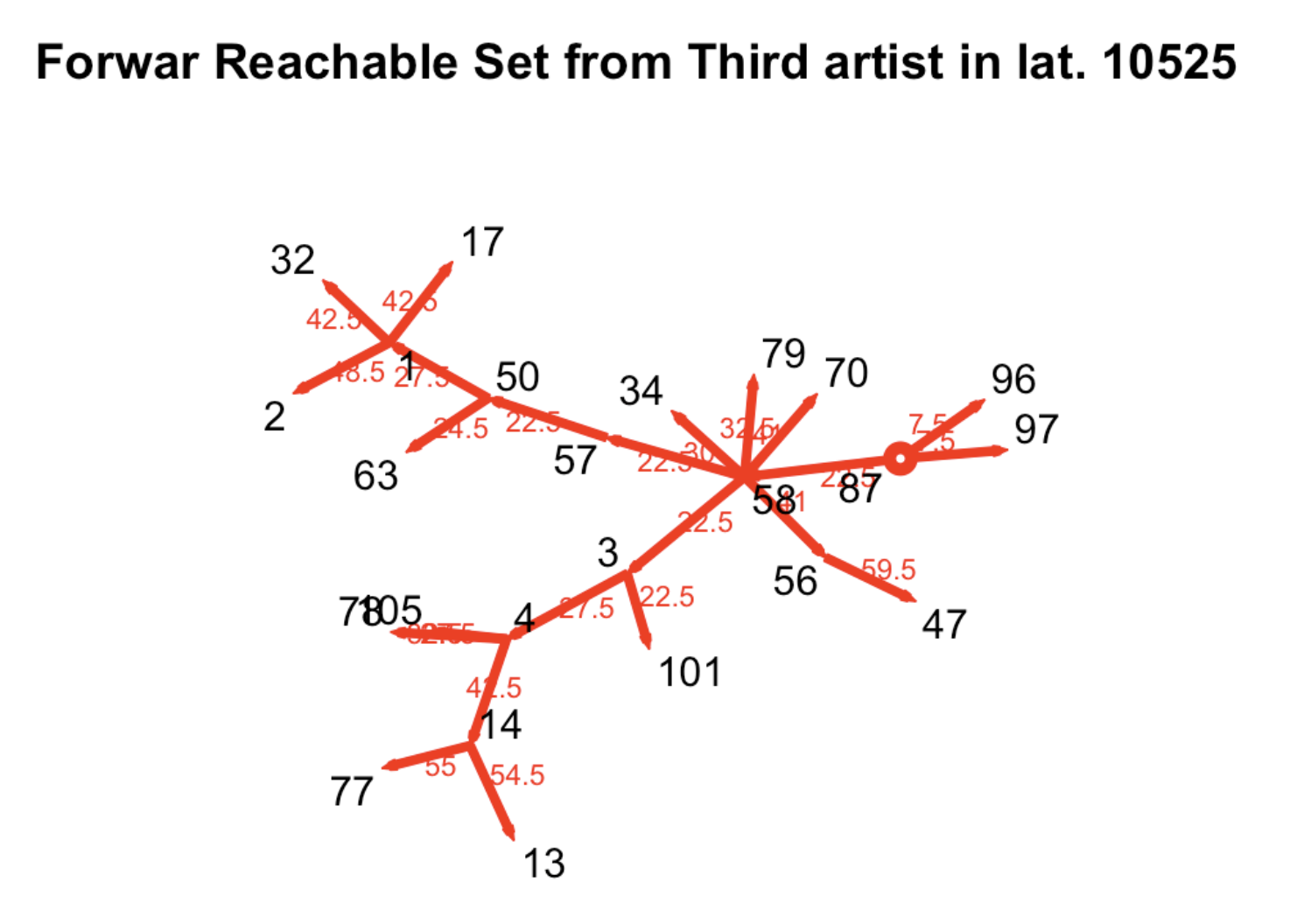
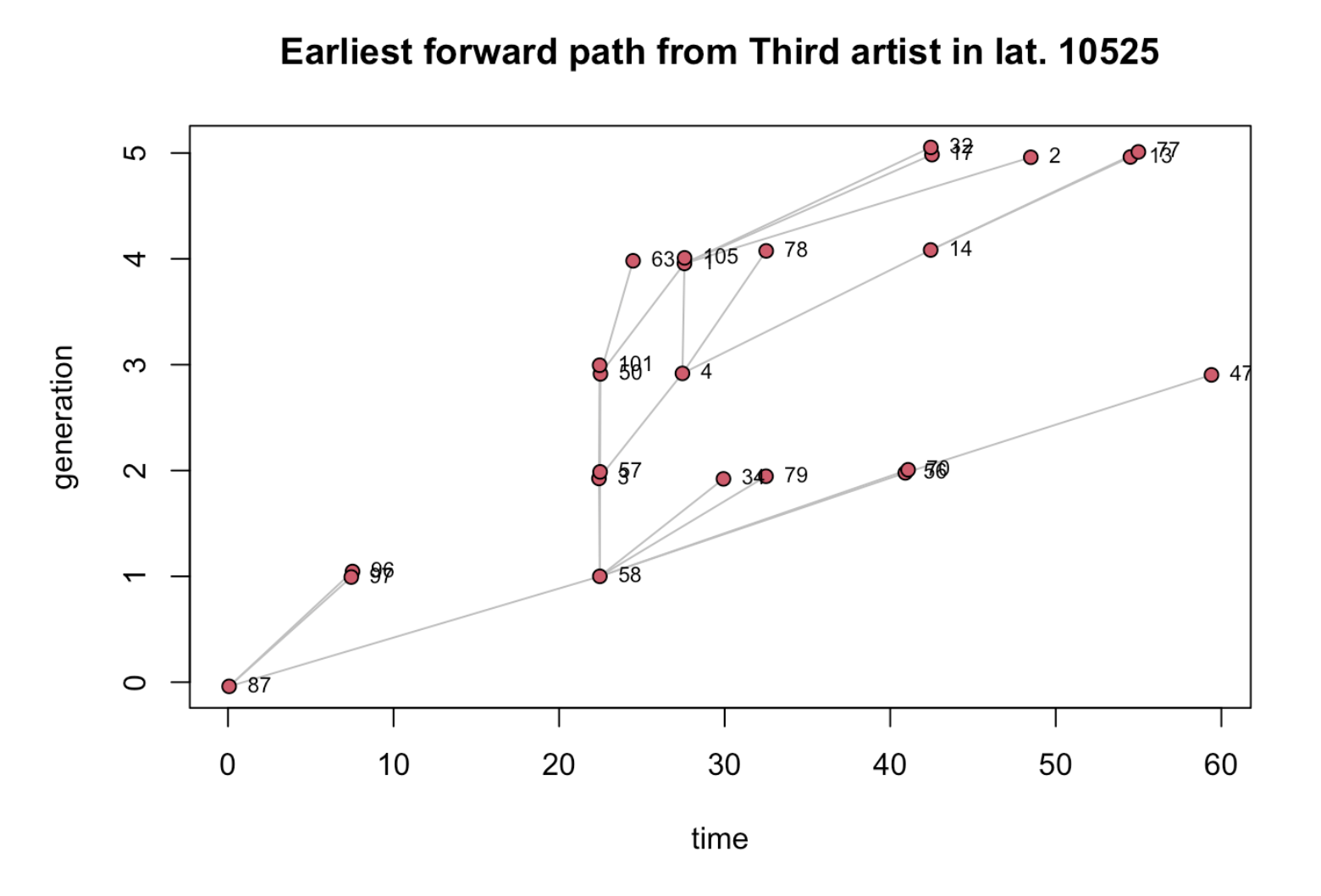
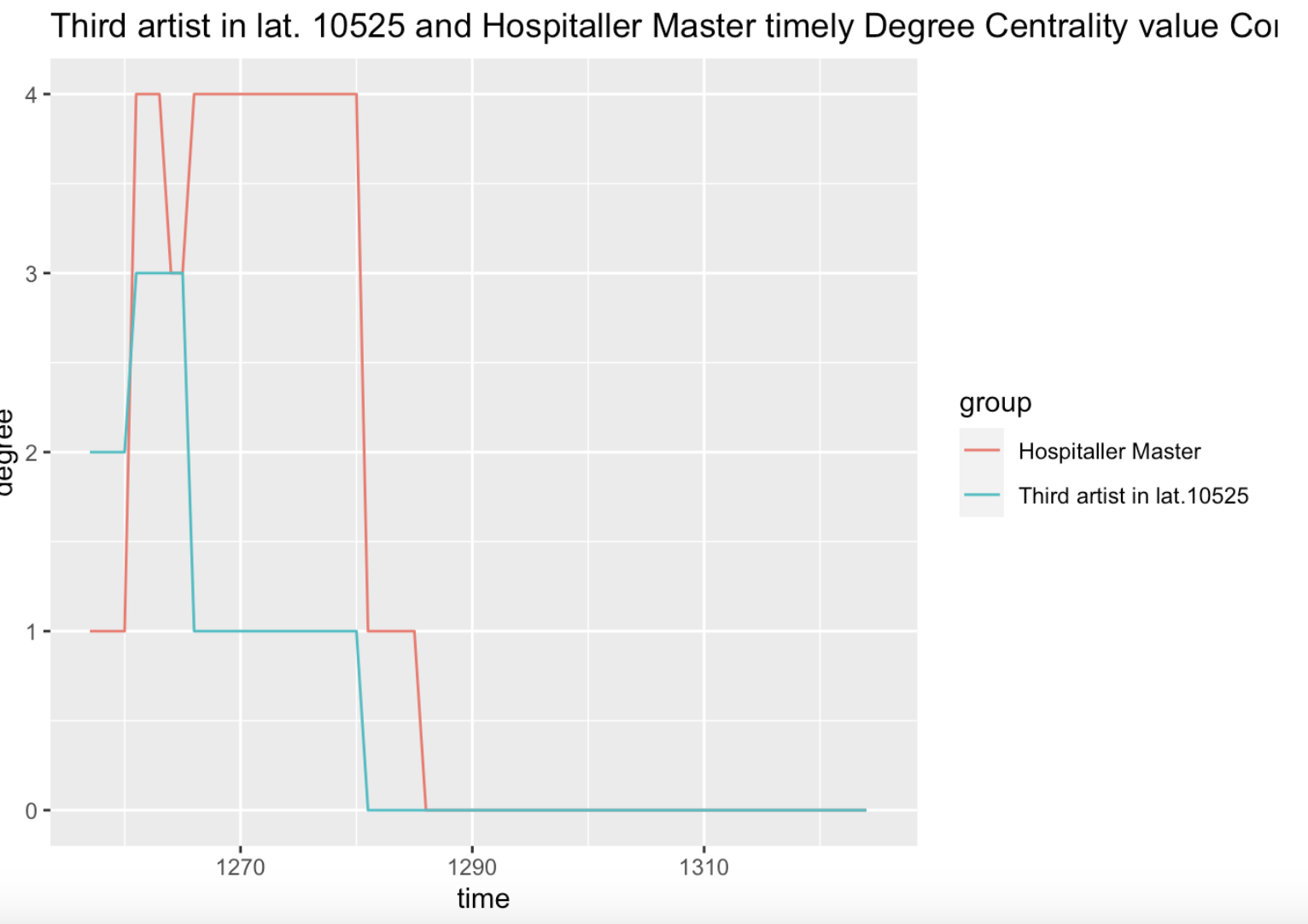
This project use humanities data as a network.This is a historical religion Quaker correspondence networks, in which the nodes represent writers and recipients of letters, and the edges of a network represent epistolary exchanges. This project focus on Hospitaller Master, the author to demonstrate the dynamic network anlysis.
Reference:
https://programminghistorian.org/en/lessons/temporal-network-analysis-with-r2021-2 Network Data Analysis and Models Project 7:Dynamic Network Analysis Animation
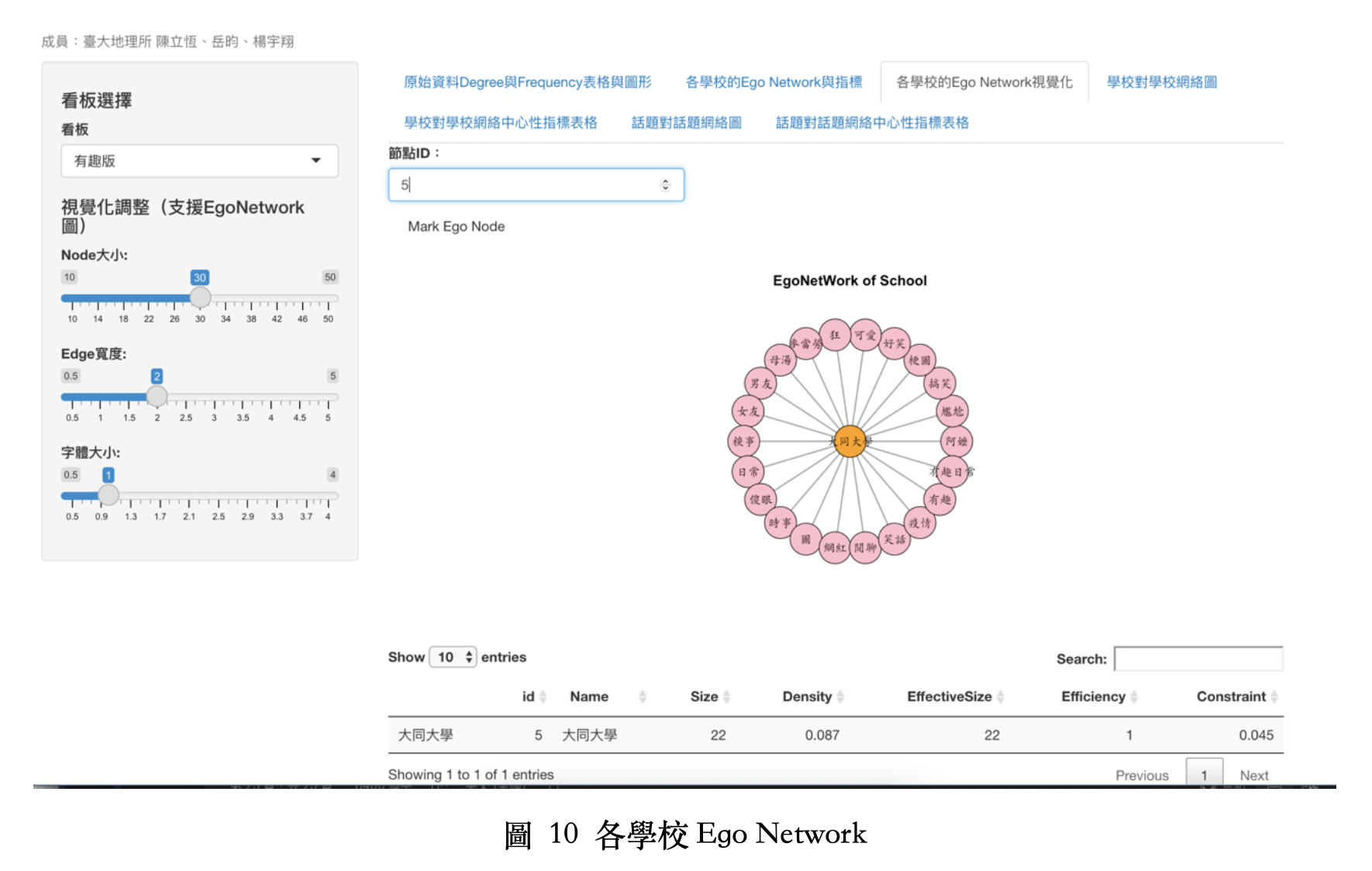
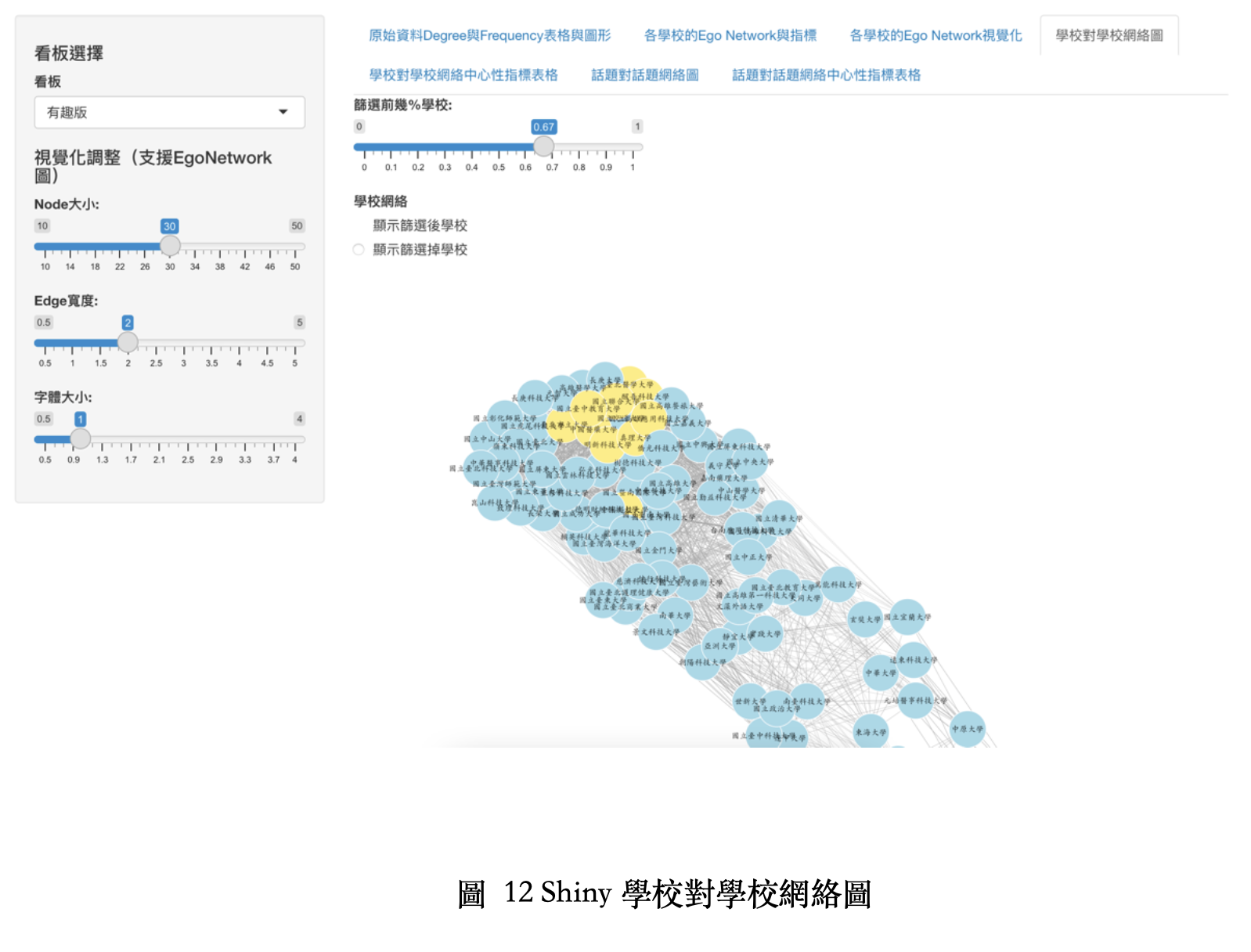
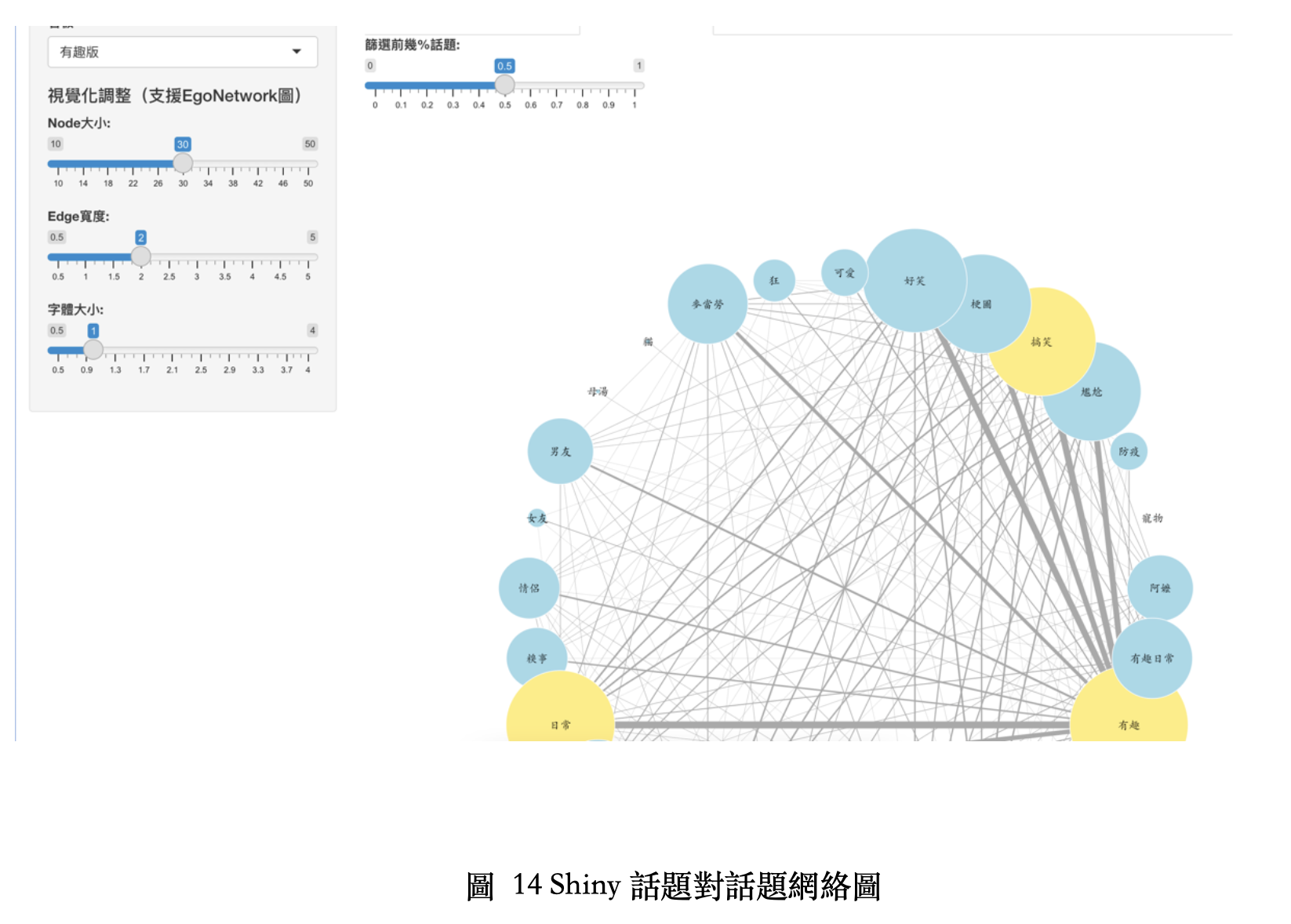
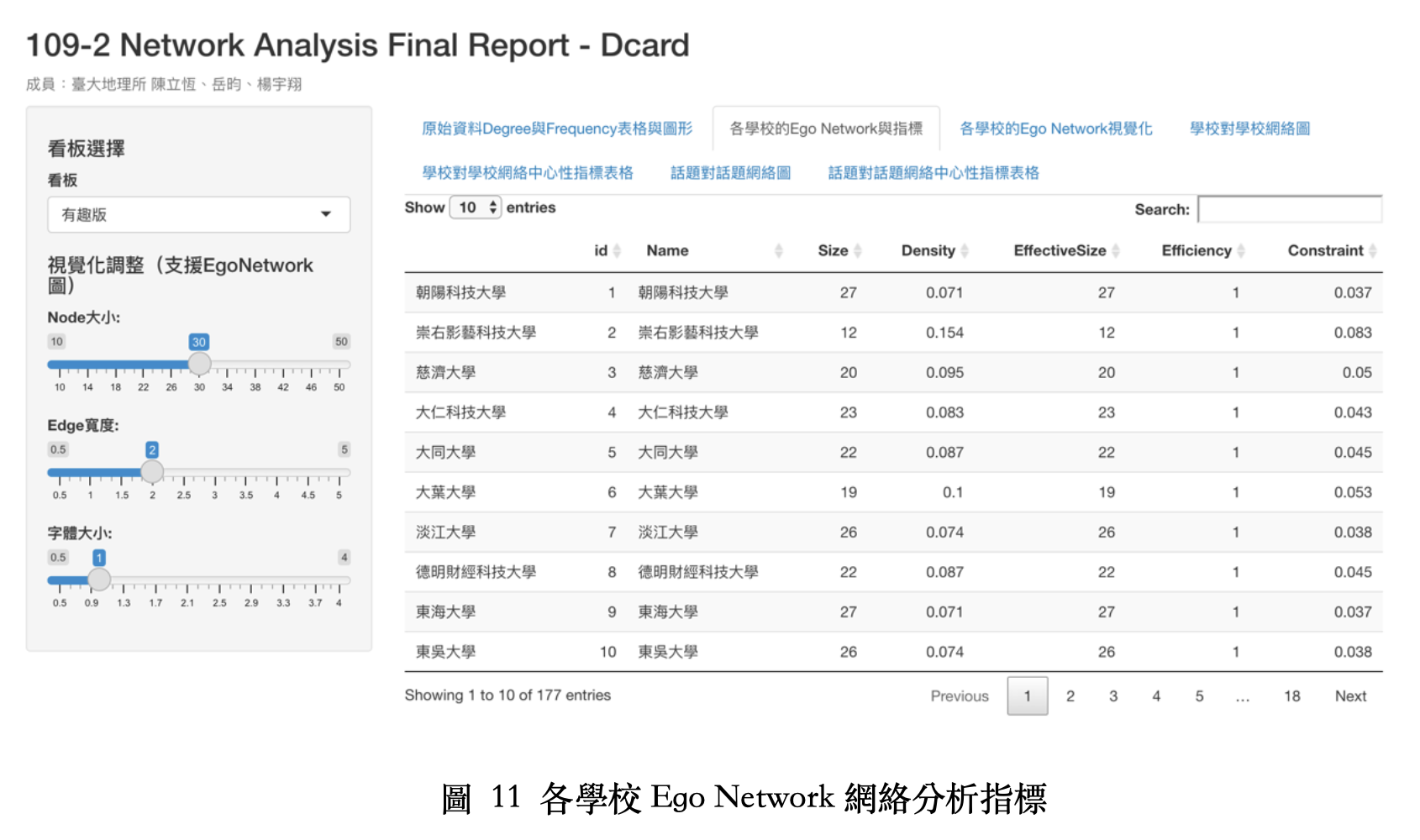
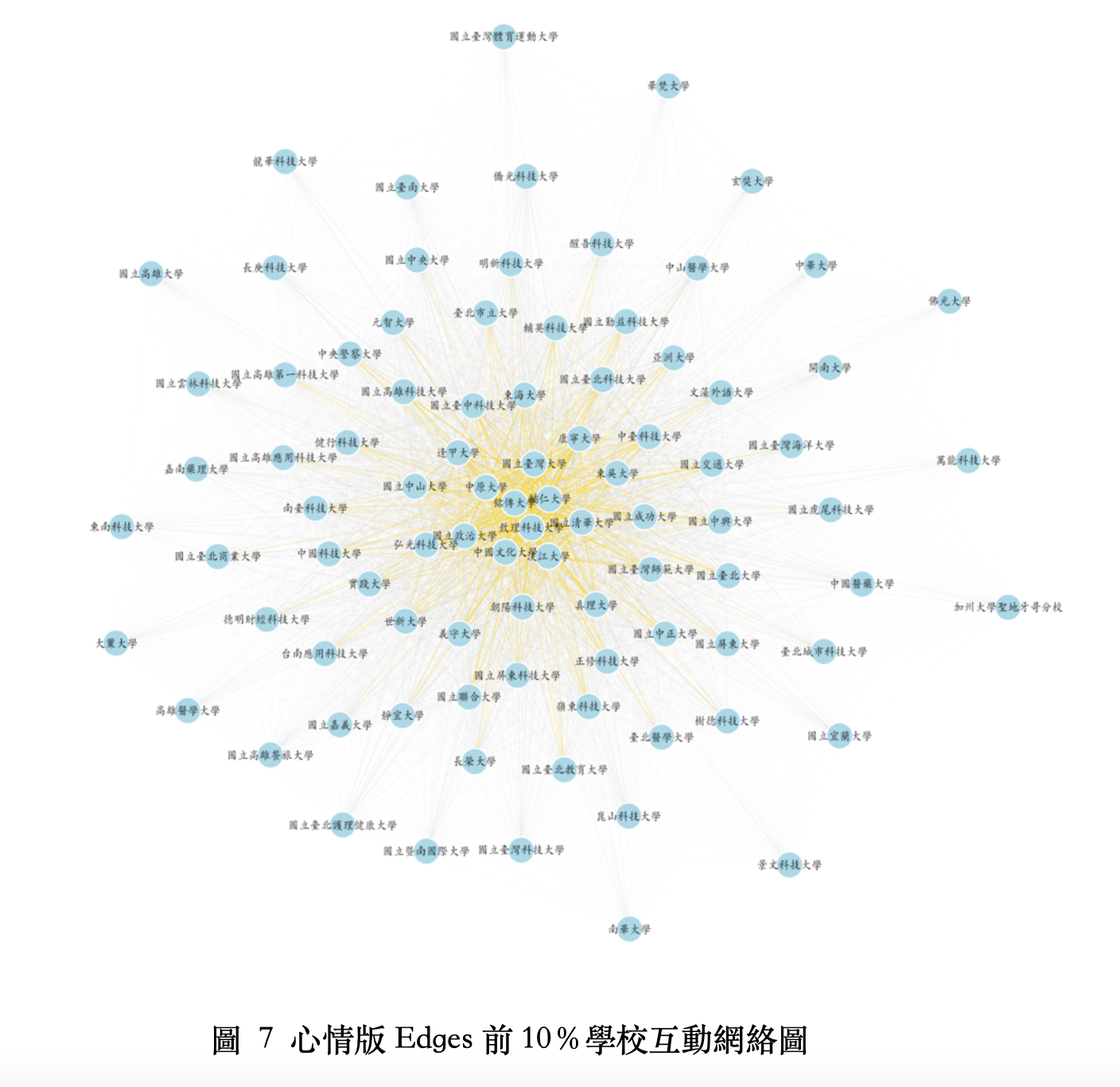
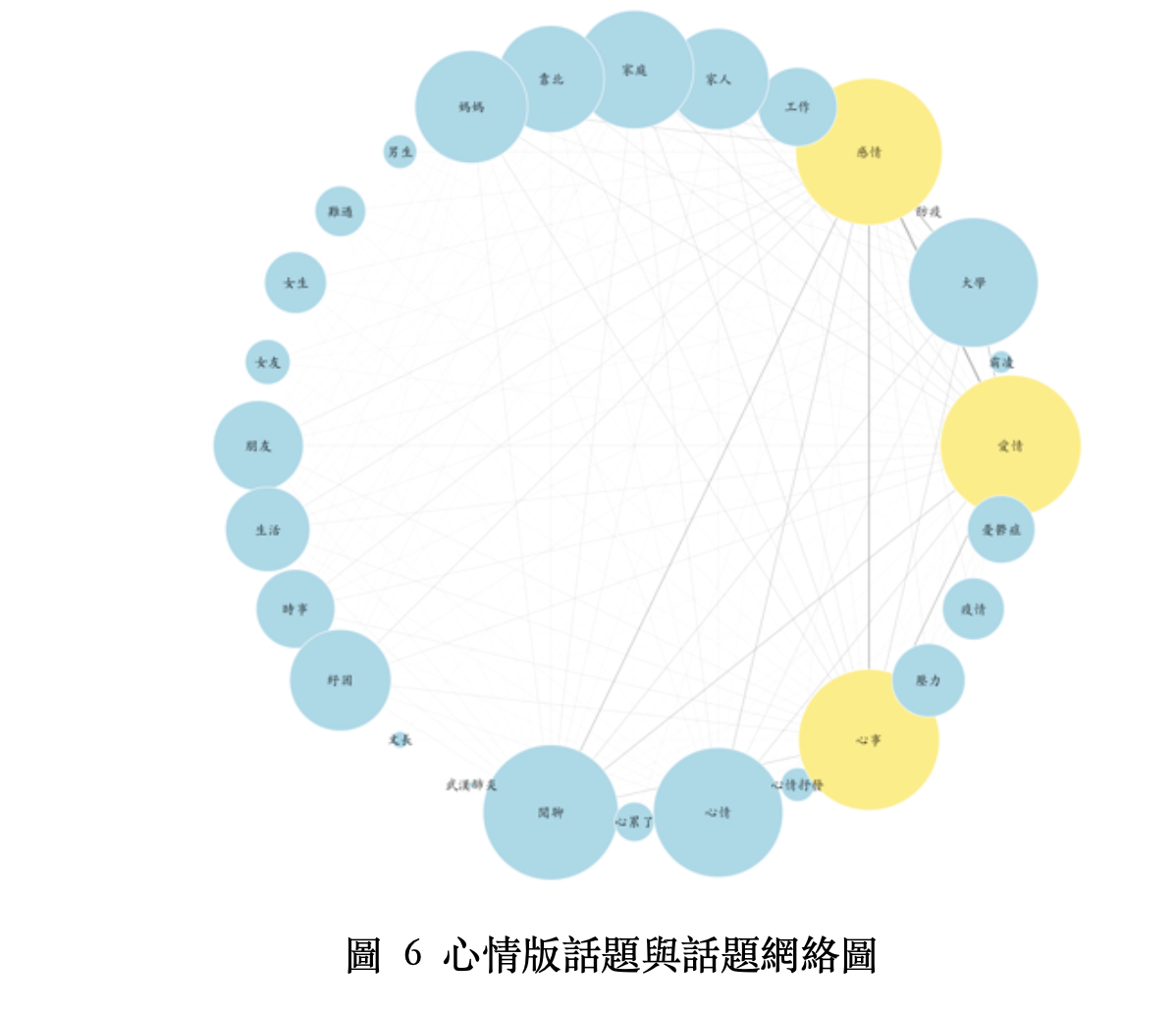
Dcard(狄卡),是台灣的社群網路論壇類的網站。在 2011 年成立初期,只開放 台灣跟海外部分大學的學生註冊。2021 年起,已開放非大學生一般民眾憑證件註冊。 創辦人為臺大學生林裕欽和簡勤佑,在大學時期,在創意創業學程架設名稱命名 「Dcard」社群網站的課程作品。作品的緣起是,因為他們覺得大部分學生交友圈較為 封閉,沒機會認識校外的同學,所以兩人討論網站的發展可能性(數位時代, 2017)。如今 Dcard 現在是超過 100 萬會員的大型網路論壇,也是資本額高達 4000 萬 並拿到上億融資的公司(許依晨,2020)。
Dcard 最主要的就是留言板、論壇功能,類似 Facebook,但隱私權更高,只顯示學校 不會顯示個人身份。使用者可以藉由 Dcard 的網站,透過瀏覽、發文、回應他人文 章,論壇也依照內容不同分作不同討論版,包括「有趣」、「感情」、「閒聊」等。 除此之外每個學校還有自己的個版,稱作「校版」,只有該校學生可以在上面發文及 留言(天下雜誌,2021)。
在開版的歷史上,除了官方自行開設的版外,也可以透過在「Dcard 版」發文連 署,例如同性婚姻法案在台灣立法院表決之際,開設的支持同志權益的彩虹板。根據 網站上的紀錄, Dcard 官方有時也會因為當今流行的話題等因素開放特定討論版, 例如「寶可夢版」就是在寶可夢開始流行時設立的,2018 年花蓮地震開設「地震回報 版」。2020 年,因嚴重特殊傳染性肺炎疫情日趨嚴重,開設「COVID-19 版」(數位 時代,2017)。 在每個版上,有不同文章,來自不同學校的人發文,而每篇文可能幾百人,幾千人的 回覆的學校也都不同。除此之外,不同文章都會有作者標注的關鍵字(一至五個), 於是我們就好奇,哪些學校對於哪些關鍵字的討論度最高,這些學校是否形成一個網 絡,以及話題關鍵字和關鍵字的網絡關係,是否會因為被很多學校都在討論而形成。 因此,我們的期末研究報告訂定為探索網路論壇 Dcard 學校與話題關鍵字的網絡。我 們選用兩個版,「心情版」跟「有趣版」兩個版來進行分析。
2021-2 Network Data Analysis and Models Project 8:Explore The Network Relationship Of Schools And Topics On Dcard, An Online Forum
I joined Geographical Information Science Lab in the Department of Geography in National Taiwan University. My academic supervisor is Professor Tzai-Hung Wen, Ph.D.
Any cooperation or suggestion is welcome to me. E-mail is on school system. Phonenumer and the Address is Geography Department of National Taiwan University
Since 7,August 2019 (Wed)